Introduction
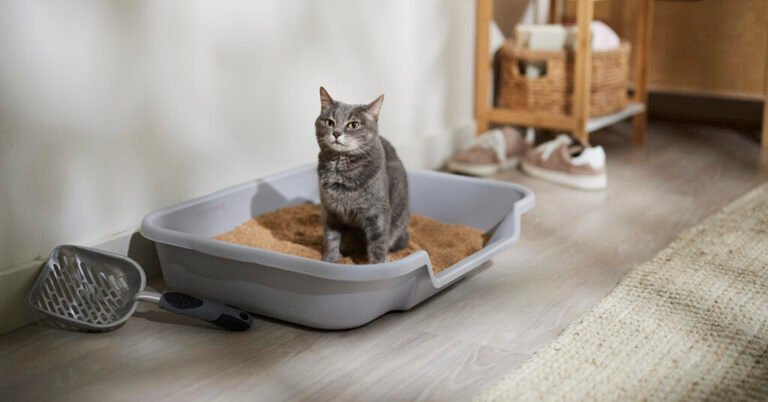
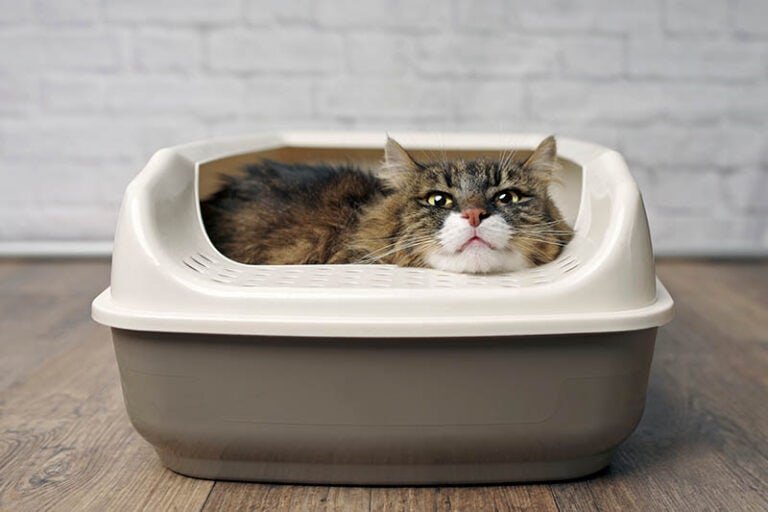
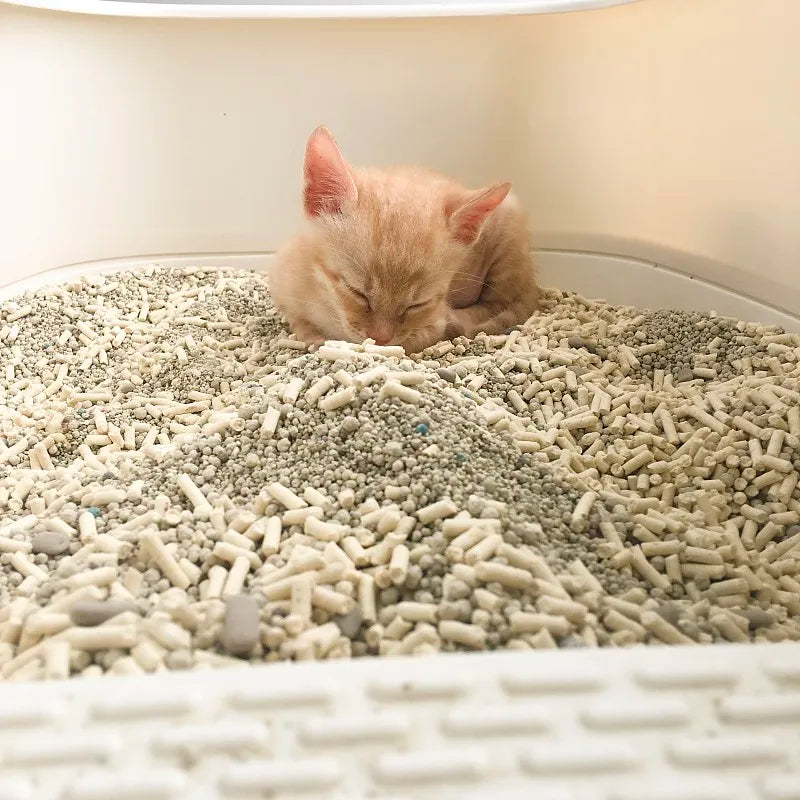
A cat may lie in the litter box because it feels sick, stressed, unsafe, too warm, or unable to pass urine. Sometimes a kitten may play in it, or a new cat may use the box as a hiding place. But suddenly resting in the litter box is not normal for most cats, especially when it happens with repeated trips, straining, crying, vomiting, or little to no urine.
For cat owners in the United States, the most urgent concern is a possible urinary blockage. This problem is more common in male cats and can become life-threatening quickly. If your cat strains in the box and produces no urine, seek emergency veterinary care now.

Why Is My Cat Lying in the Litter Box?
Your cat may lie in the litter box because the box feels like a safe, familiar place. However, the behavior can also point to pain or illness. The surrounding signs matter more than the behavior alone.
Common explanations include:
- Urinary pain or blockage
- Constipation
- Diarrhea or stomach illness
- Stress, fear, or a need to hide
- A recent move or change at home
- Heat-seeking behavior
- Confusion or weakness in an older cat
- Kitten play or curiosity
- A dirty, crowded, or poorly placed resting area
A cat that feels sick may stay in the litter box because it needs to urinate or defecate often. It may also feel too weak to leave. A stressed cat may choose the box because it smells familiar and has sides that offer some protection.
The key question is this: Is your cat using the litter box normally, or is it staying there without producing normal urine or stool?
According to guidance from the Cornell Feline Health Center, urinary problems can cause frequent box visits, straining, vocalizing, and changes in urine output. Those signs need prompt attention.

When Is Lying in the Litter Box an Emergency?
Treat the behavior as an emergency when your cat may be unable to urinate. A blocked urethra prevents urine from leaving the body. Without treatment, waste products and dangerous electrolyte changes can build up.
Seek an emergency veterinarian immediately if your cat:
- Strains but produces no urine
- Produces only a few drops after repeated attempts
- Cries, yowls, or seems distressed in the box
- Licks the genital area often
- Has blood in the urine
- Vomits or refuses food
- Has a swollen, painful, or tense belly
- Becomes weak, confused, limp, or unusually quiet
- Keeps entering and leaving the box
- Is a male cat showing any urinary signs
Do not wait to see whether the problem improves overnight. Do not press on your cat’s abdomen. Do not give human pain medicine, laxatives, or leftover pet medicine unless a veterinarian tells you to do so.
A urinary blockage can look like constipation because the cat may strain in the box. This is one reason home diagnosis can be risky. The American Veterinary Medical Association also advises veterinary evaluation for signs of urinary disease.
If your cat is passing normal urine and stool but still spends unusual amounts of time in the box, call your regular veterinarian as soon as possible. The issue may not be an emergency, but a sudden behavior change still deserves attention.
What Should I Check Right Now?
First, watch your cat from a short distance. Avoid startling or handling it more than needed. Check the litter box for fresh urine clumps and stool, then note how often your cat tries to use the box.
Use this quick check:
| What you see | What it may mean | Best next step |
|---|---|---|
| Normal urine and stool, brief resting | Stress, warmth, or habit | Improve the environment and monitor closely |
| Frequent trips with small urine clumps | Bladder irritation or urinary disease | Contact a veterinarian promptly |
| Straining with no urine | Possible blockage | Go to an emergency veterinarian |
| Straining with no stool | Constipation or another bowel problem | Call a veterinarian promptly |
| Diarrhea, vomiting, or poor appetite | Gastrointestinal illness | Arrange veterinary care |
| Hiding, weakness, or confusion | Pain or systemic illness | Seek veterinary advice promptly |
If possible, record a short video of the behavior. Write down when it began, whether your cat is eating and drinking, and whether the cat is passing urine and stool. This information can help the veterinary team.
Do not rely only on the size of a urine clump. A small clump may reflect a small amount of urine, but it can also be difficult to judge in a multi-cat home. If you cannot tell which cat used the box, separate the concerned cat in a quiet room with food, water, and a clean box while you contact your veterinarian. Do this only if the cat is stable and not showing emergency signs.

Medical Reasons a Cat May Stay in the Litter Box
Medical problems are more likely when the behavior is new or comes with changes in eating, drinking, movement, or bathroom habits.
Urinary tract disease
Bladder inflammation, urinary stones, infection, and urethral blockage may cause painful urination. A cat may keep returning to the box because it feels an urge to urinate even when little urine is present.
Possible signs include frequent attempts, straining, blood in the urine, licking, and urinating outside the box. Cats with these signs need a veterinary exam. The cause cannot be confirmed by behavior alone.
Constipation
A constipated cat may sit in the box for a long time, strain, or pass small, dry pieces of stool. Some cats may cry or vomit. Constipation can have many causes, including dehydration, pain, swallowed hair, medication, or an intestinal problem.
Do not give a human enema. Some human products can seriously harm cats. A veterinarian can decide whether your cat needs fluids, an exam, imaging, or a safe bowel treatment.
Diarrhea or intestinal illness
A cat with diarrhea may remain near the box because it has sudden urges. It may also feel weak or nauseated. Call a veterinarian if diarrhea lasts more than a short period, contains blood, or occurs with vomiting, dehydration, fever, pain, or poor appetite.
Kittens, senior cats, and cats with other diseases can become dehydrated faster. They may need care sooner than a healthy adult cat.
Pain or weakness
Arthritis, injury, dental disease, kidney disease, and other illnesses may make a cat feel unsafe elsewhere. A litter box with high sides may also be hard for a painful cat to enter, so changes in box access can create new problems.
A cat that lies in the box and does not groom, eat, or move normally should be examined. Cats often hide pain, so a quiet cat is not always a comfortable cat.

Stress and Environmental Causes
Stress can make a cat choose the litter box as a hiding place. The box has a strong familiar scent, and its walls may create a small space away from people, dogs, children, or other cats.
Common triggers include:
- Moving to a new home
- A new baby, pet, roommate, or visitor
- Construction, loud noise, or fireworks
- Conflict between cats
- A changed feeding or cleaning schedule
- A litter brand or box change
- Too few boxes
- A box placed near a washer, dryer, furnace, or busy doorway
The box may be attractive because it is the only space your cat can reach without being disturbed. This does not mean the cat prefers dirty litter. It may mean the home lacks a better safe spot.
Give your cat a quiet resting area away from the box. A covered bed, open carrier, cardboard box, or elevated perch may work. Let the cat choose whether to use it. Do not force the cat into a new hiding place.
Keep the litter box clean, but avoid strong scents. Many cats dislike perfumed litter, deodorizer, and harsh cleaning chemicals. The ASPCA recommends looking at environmental changes when a cat develops new behavior problems.
If another pet guards the path to the box, add boxes in separate areas. A cat should not have to pass a threatening animal to use the bathroom.

How to Improve the Litter Box Setup
A better setup can reduce stress and prevent some box problems, but it will not treat a medical emergency.
Use these steps:
- Provide enough boxes. A common veterinary behavior guideline is one box per cat, plus one extra. In a two-cat home, that means three boxes when space allows.
- Place boxes in quiet, easy-to-reach areas. Avoid locations where a cat can be cornered.
- Use large boxes. The box should let the cat turn around comfortably.
- Offer a low-entry box for older or painful cats. The entrance should be easy to step over.
- Scoop often. Remove waste at least daily, and more often in homes with several cats.
- Avoid sudden litter changes. Mix new litter with the old type over several days when possible.
- Clean accidents with an enzymatic cleaner. This can reduce lingering odor that may draw a cat back to the wrong place.
- Keep food and water away from the litter box. Most cats prefer separate areas for eating and elimination.
The best box setup depends on the cat. Some cats prefer uncovered boxes, while others feel safer with a cover. Some prefer fine, unscented litter. Watch what your cat uses comfortably rather than assuming one design fits every cat.
If your cat keeps lying in the box after you improve the setup, do not assume the issue is behavioral. Persistent or sudden behavior deserves a veterinary check.

How Veterinarians Find the Cause
A veterinarian may begin with a physical exam and questions about urine, stool, water intake, food, medications, and household changes. The exam may include feeling the abdomen, checking hydration, and assessing pain.
Common tests may include:
- Urinalysis
- Urine culture in selected cases
- Blood tests
- X-rays or ultrasound
- A fecal test
- An assessment of mobility or pain
Treatment depends on the cause. Bladder inflammation, stones, infection, constipation, kidney disease, and stress-related urinary problems do not all receive the same treatment.
Do not assume that a urinary problem is a simple infection. Cats can have painful lower urinary tract disease without a bacterial infection, and antibiotics are not useful for every cause. Your veterinarian may need testing before choosing treatment.
If the cat is blocked, the veterinary team may need to relieve the obstruction, provide fluids, control pain, and monitor blood values. That is not a condition to manage at home.

Common Mistakes to Avoid
The most dangerous mistake is treating straining as constipation without confirming that urine is passing. A cat can strain for both reasons, and a urinary blockage requires immediate care.
Other mistakes include:
- Waiting several days after a sudden change
- Giving acetaminophen, ibuprofen, aspirin, or other human drugs
- Pressing or massaging the belly
- Pouring water into the cat’s mouth
- Changing several things at once, which hides the cause
- Punishing the cat for staying in the box or having accidents
- Using air fresheners or strong cleaners near the box
- Assuming a male cat is safe because a few drops came out
- Watching only the litter box and ignoring appetite, energy, and vomiting
Cats are good at hiding illness. A cat that looks calm may still be in pain. When in doubt, call a veterinary clinic and describe exactly what you see.

Key Takeaways
- A cat may lie in the litter box because of stress, illness, pain, fear, or a need for warmth.
- Sudden box-resting is more concerning than a long-standing habit.
- Straining, repeated trips, crying, blood, vomiting, weakness, or little to no urine are warning signs.
- A male cat that cannot urinate needs emergency veterinary care.
- Do not give human medicine or try to treat a possible blockage at home.
- Track urine, stool, appetite, water intake, and behavior.
- Improve the box setup only after urgent medical problems have been considered.
FAQs
Is it normal for a cat to sleep in the litter box?
It is not a typical resting habit for most adult cats. A kitten may do it from curiosity, and a stressed cat may use the box as a hiding spot. If an adult cat suddenly starts sleeping or lying there, check for illness, pain, fear, and recent changes at home.
Why is my cat sitting in the litter box but not using it?
Your cat may feel the urge to urinate or defecate but be unable to pass enough urine or stool. This can occur with urinary disease, blockage, constipation, or intestinal illness. If there is straining or no urine, treat it as an emergency.
Why is my male cat lying in the litter box?
Male cats have a higher risk of urethral blockage because their urethra is narrow. Lying in the box alone does not prove a blockage, but lying there with straining, repeated attempts, crying, genital licking, or little urine requires immediate veterinary care.
Can stress make a cat stay in the litter box?
Yes. A cat may see the box as a familiar, protected place during a stressful event. Provide a separate quiet hiding area, reduce conflict, and keep the box clean. Still, have a veterinarian assess any sudden change because stress and illness can look alike.
How long can I watch my cat before calling the vet?
Call right away for no urine, repeated straining, severe pain, vomiting, collapse, or marked weakness. For less urgent changes, such as unusual box-resting with normal urine and stool, contact your veterinarian promptly rather than waiting several days.
Conclusion
A cat lying in the litter box may be seeking safety, warmth, or privacy. It may also be showing the first visible sign of urinary, bowel, or other illness.
Check whether your cat is passing normal urine and stool. If not, or if your cat strains, cries, vomits, becomes weak, or makes repeated trips, seek veterinary care immediately. If bathroom habits remain normal, reduce stress, improve the litter setup, and arrange a veterinary visit if the behavior continues.