A neutered cat may pee outside the litter box because of pain, illness, stress, marking, or a problem with the box itself. Neutering lowers urine marking in many cats, but it does not stop every urinary or behavior problem.
For cats in the United States, sudden house-soiling should start with a veterinary check. A urinary blockage can become life-threatening, especially in male cats. Do not assume your cat is being spiteful or “forgetting” training.

First, check for a medical emergency
A cat that strains to pee, makes repeated trips to the box, or passes little or no urine needs urgent veterinary care. A blocked urethra is an emergency. Without treatment, a cat can become severely ill in a short time.
Go to an emergency veterinarian now if your cat:
- Tries to pee but produces no urine
- Produces only drops while straining
- Cries, pants, or shows clear pain
- Licks the genital area again and again
- Vomits, becomes weak, or hides
- Has a swollen or painful belly
- Suddenly stops eating and seems very unwell
Male cats face a higher blockage risk because their urethra is long and narrow. Neutering does not remove this risk.
If your cat still passes urine but urinates in unusual places, schedule a veterinary visit soon. A prompt exam can help find bladder inflammation, stones, infection, kidney disease, diabetes, or another cause.

The most common reasons a neutered cat pees everywhere
The key question is whether your cat is urinating or spraying. The posture, amount, and location can provide useful clues, but only a veterinarian can diagnose the cause.
1. Bladder pain or inflammation
Feline idiopathic cystitis is a common cause of urinary signs in cats. It involves bladder inflammation without a clear infection or stone. Stress may play a role, but the pain is real.
A cat with bladder trouble may:
- Urinate often
- Strain in the box
- Cry or act restless
- Lick the genital area
- Pee on smooth or cool surfaces
- Pass small amounts of urine
Some cats develop blood in the urine. Blood may be visible, or it may appear only on a urine test.
2. Urinary stones or a urethral blockage
Stones can irritate the bladder or block urine flow. Crystals may also contribute to irritation and blockage.
A blocked cat may look constipated because it strains in the litter box. This mistake can delay care. If you are not sure whether your cat is passing urine, treat the situation as urgent and call a veterinarian.
3. Urinary tract infection
A bacterial urinary tract infection can cause frequent urination, pain, accidents, and blood in the urine. However, not every cat with these signs has an infection.
Older cats and cats with conditions such as diabetes or kidney disease may have a higher risk. A urine test, and sometimes a urine culture, helps the veterinarian decide whether antibiotics are appropriate. Do not give leftover antibiotics.
4. Kidney disease, diabetes, or thyroid disease
Some illnesses make a cat produce more urine. The cat may not reach the box in time, or the box may become soiled quickly.
Watch for:
- increased thirst
- Larger urine clumps
- Weight loss
- Increased or reduced appetite
- Vomiting
- Poor coat condition
- Low energy
These signs need a veterinary exam. Blood work and urine testing may be needed.
5. Arthritis or pain
An older cat may avoid a box that requires climbing, jumping, or walking far. Pain can also make it hard to hold a squat.
A cat with arthritis may choose a nearby rug, bed, or floor. Use a box with a low entry near the cat’s main living area while arranging a veterinary assessment.
6. Stress and change
Cats may urinate outside the box after changes in their home or routine. Common triggers include:
- A new pet or baby
- Visitors
- Moving furniture
- Construction or loud noise
- A new work schedule
- Conflict with another cat
- Outdoor cats near windows
- A change in litter or box location
Stress can also worsen some bladder problems. A cat may seem calm while still reacting to a change in scent, noise, territory, or routine.
7. Urine marking
Neutered cats can still spray. Marking usually involves a small amount of urine on a vertical surface, such as a wall, door, or furniture leg. The cat often stands with the tail raised or quivering.
Marking is not the same as emptying a full bladder. It may signal territorial concern, social conflict, or anxiety. Neutering often reduces marking, but it does not guarantee that marking will stop.
8. Litter box problems
Your cat may dislike the box, litter, location, or level of cleanliness. A box can be “clean” by human standards and still be unacceptable to a cat.
Common problems include:
- Too few boxes
- A box that is too small
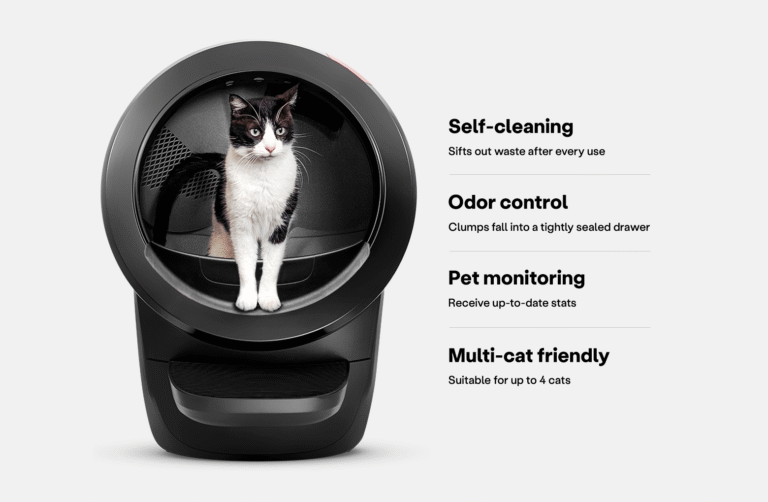
- A covered box that traps odor
- A high entry that is hard to use
- Strongly scented litter
- Sudden litter changes
- A noisy or crowded location
- Another pet blocking access
- A box near food or water

How to tell spraying from regular urination
Use the pattern as a clue, not as a diagnosis.
| Sign | More consistent with spraying | More consistent with regular urination |
|---|---|---|
| Amount | Small amount | Larger puddle or clump |
| Surface | Often vertical | Often horizontal |
| Posture | Standing, tail up or quivering | Squatting |
| Location | Doors, walls, windows, furniture | Rugs, beds, clothing, floors |
| Possible trigger | Territory or social stress | Pain, urgency, box aversion, illness |
| Odor | Strong urine odor | Strong urine odor is also possible |
Some cats do both. A cat with bladder pain may squat outside the box, while a stressed cat may spray near a door.
Use a phone camera for a short period if you need help seeing the pattern. Do not delay care while trying to identify it at home.
What to do next: a safe troubleshooting plan
1. Arrange a veterinary exam
A veterinary visit is the best first step, especially when the behavior is new. Tell the clinic:
- When the accidents began
- How often they happen
- Whether your cat strains
- Whether urine appears normal, bloody, or cloudy
- Where the cat urinates
- Whether thirst or appetite changed
- Whether other pets or household changes are present
The veterinarian may perform a physical exam, urinalysis, urine culture, blood tests, X-rays, or ultrasound. The right tests depend on the cat’s age, signs, sex, and exam findings.
2. Improve the litter box setup
Use these starting points:
- Provide one box per cat, plus one extra.
- Place boxes in separate, quiet areas.
- Keep at least one box on each level of the home.
- Use a box large enough for the cat to turn around.
- Offer a low-entry box for cats with pain or limited movement.
- Scoop waste at least once a day.
- Wash boxes with mild, unscented soap.
- Avoid strong perfumes and deodorizing products.
- Keep boxes away from loud appliances and busy walkways.
Some cats prefer uncovered boxes. Others prefer a covered box for privacy. If you are unsure, offer both and track which one your cat uses.
3. Make litter changes slowly
If you want to change litter, place a second box with the new litter beside the old one. Give your cat time to choose.
A sudden switch can cause a box refusal. Scented litter may also bother cats that prefer a plain, unscented texture.
4. Clean accident areas correctly
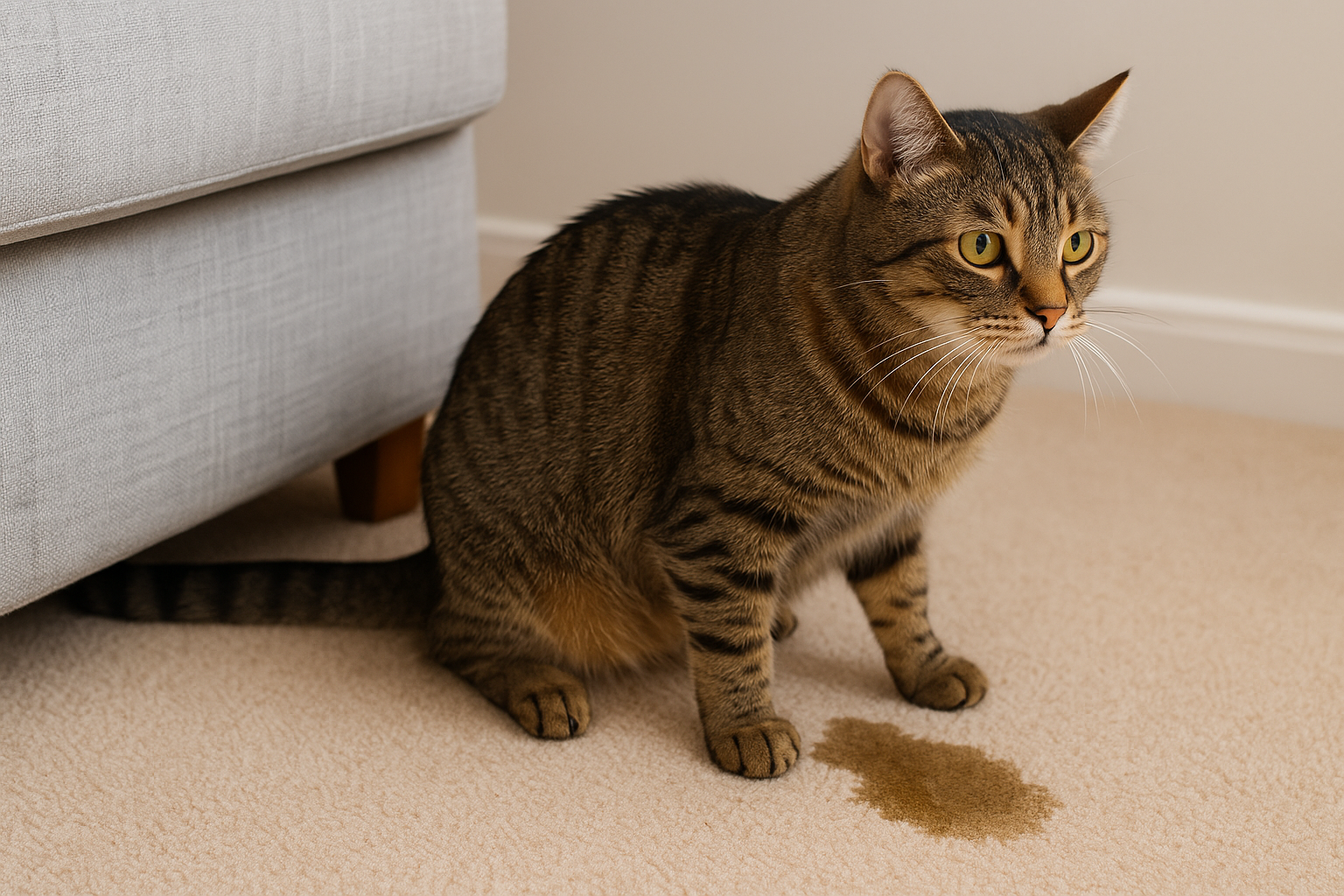
Use an enzymatic pet-urine cleaner made for the surface. Follow the label directions and allow the area to dry.
Avoid ammonia-based cleaners. Ammonia smells similar to urine and may encourage repeat marking. Do not use heat on fabrics until the urine odor is removed, because heat can set the smell.
A black light may help locate old spots, but it cannot tell you why the cat urinated there.
5. Reduce conflict and stress
Give each cat separate access to key resources. These include food, water, sleeping areas, hiding places, scratching posts, and litter boxes.
Block views of outdoor cats if they trigger marking. Add safe high spaces and quiet hiding areas. Keep feeding and play times predictable when possible.
Do not punish, yell, rub your cat’s nose in urine, or physically place the cat in the box. Punishment can increase fear and may worsen the problem.
6. Keep a simple record
Write down:
- Date and time
- Location
- Amount of urine
- Posture
- Signs of pain
- Food and water changes
- Household events
- Litter box use
This record can show whether the plan is working and gives your veterinarian useful information.

What not to assume
“My cat is neutered, so it cannot be marking”
Neutering reduces hormone-driven marking, but a neutered cat may still mark because of stress or territory. Medical problems can also look like marking.
“There is no blood, so my cat is fine”
Blood is only one possible sign. Pain, blockage, bladder inflammation, and kidney disease may occur without visible blood.
“The urine smells bad, so my cat must have an infection”
Urine odor alone cannot diagnose an infection. Concentrated urine, old urine, marking, and some medical conditions can also cause a strong smell.
“My cat is punishing me”
Cats do not urinate outside the box to get revenge. The behavior usually reflects a physical need, discomfort, fear, stress, or a problem with the toilet area.
“I should restrict water”
Never restrict water to reduce accidents. Extra thirst can signal illness, and access to fresh water supports normal body function. Ask your veterinarian about hydration if your cat has kidney, heart, or other disease.
“A urinary diet will fix every case”
A prescription urinary diet may help some cats, depending on the diagnosis. It is not a universal treatment for every accident. Ask a veterinarian before changing food, especially if your cat has another medical condition.

How long does it take to stop?
The timeline depends on the cause. A medical problem may improve after proper treatment, but the behavior may continue if the cat has learned to prefer a new location or still feels unsafe.
Clean soiled areas, keep boxes easy to use, and continue the plan even after the first improvement. If accidents continue, return to the veterinarian. The diagnosis may need review, or your cat may need a behavior referral.
A veterinary behaviorist can help with persistent marking, fear, conflict between cats, or severe anxiety. Medication may help some cats, but it should be part of a broader plan.
Key takeaways
- A neutered cat can still pee outside the box.
- Sudden accidents should be checked for medical causes.
- Straining with little or no urine is an emergency.
- Marking usually involves small amounts on vertical surfaces.
- Use enough clean, easy-to-reach litter boxes.
- Clean urine with an enzymatic product.
- Never punish your cat or restrict water.
- If the problem continues, ask your veterinarian for a reassessment.
Frequently asked questions
Why is my neutered male cat peeing everywhere?
Possible causes include bladder inflammation, stones, blockage, infection, illness, stress, marking, pain, and litter box aversion. Because male cats can develop a urinary blockage, straining or passing little urine requires urgent veterinary attention.
Why is my neutered female cat peeing outside the litter box?
Female cats can develop bladder inflammation, urinary infections, stones, kidney disease, diabetes, arthritis, stress, or litter box aversion. A urine test can help separate medical causes from behavior or household factors.
Why does my cat pee on my bed?
Beds are soft, absorbent, and strongly carry a person’s scent. A cat may choose one because of pain, stress, box avoidance, or a preference for soft surfaces. Keep the bedroom closed when possible, clean the bedding with an enzymatic cleaner, and arrange a veterinary check if the behavior is new.
Can stress make a cat pee outside the box?
Yes. Stress may lead to urine marking, box avoidance, or bladder inflammation. Look for changes in other pets, visitors, noise, routine, furniture, or outdoor animals. Stress does not rule out a medical problem.
Should I take my cat to the vet for one accident?
If the accident is unusual for your cat, contacting your veterinarian is wise. Seek urgent care for straining, repeated attempts to urinate, little or no urine, pain, vomiting, weakness, or a sudden decline.
Conclusion
A neutered cat peeing everywhere is usually communicating a problem, not misbehaving. Start by checking for urgent urinary signs, then arrange a veterinary exam and improve the litter setup. Medical care, careful cleaning, lower stress, and easy box access often work best together.