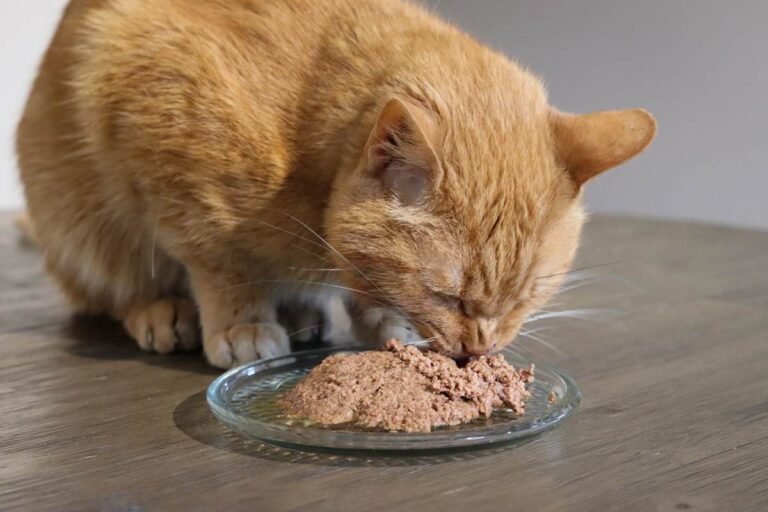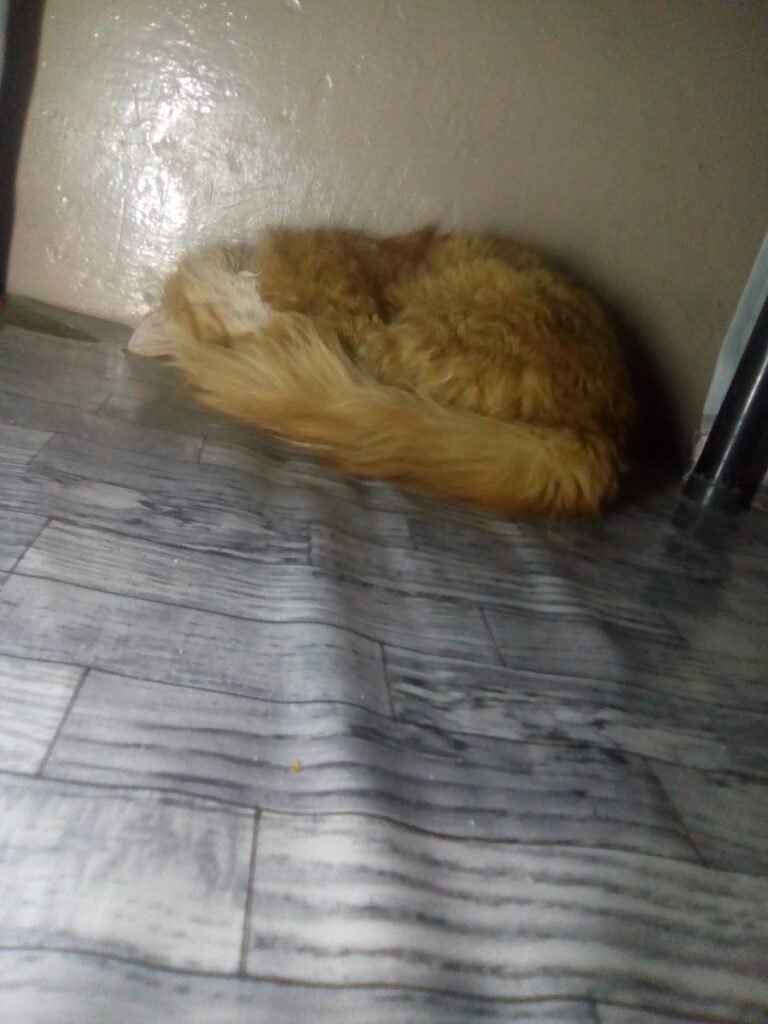
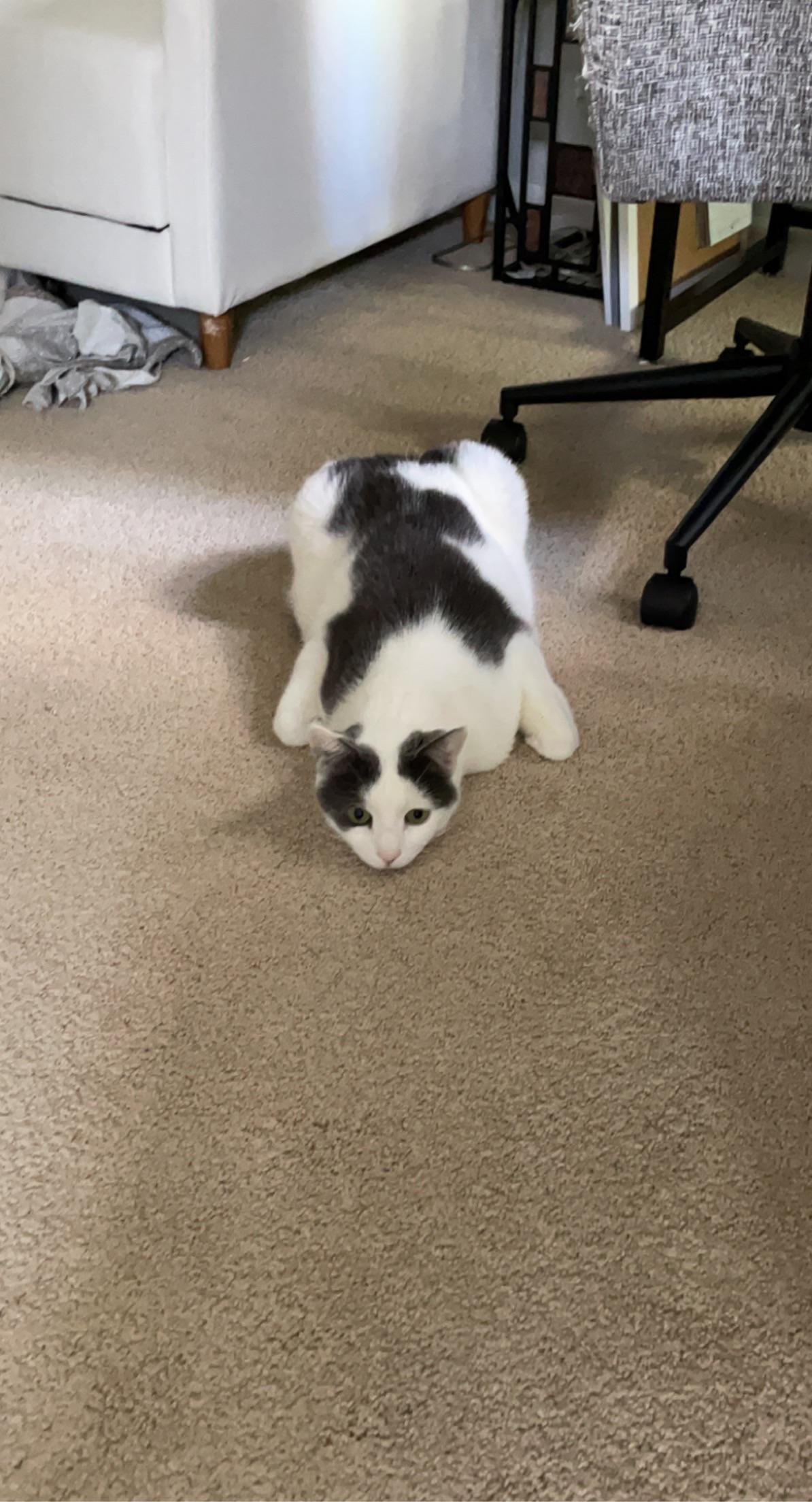
For cat owners in the United States, a cat that suddenly flops onto the floor is often doing something normal. Your cat may want a cool spot, a quiet place to rest, a better view of the room, or a little attention. Cats also rest in short bursts, so their choice of sleeping spot can seem random.
However, a new floor-laying habit can sometimes point to pain, weakness, heat stress, or another health problem. The key is to look at the whole picture: your cat’s breathing, appetite, movement, bathroom habits, energy, and behavior.

Quick answer: Why does my cat lie down on the floor?
Your cat may lie down on the floor because the surface feels cool, comfortable, or safe. Many cats also use the floor to stretch, watch people, ask for attention, or rest after play.
A floor nap is usually not a concern when your cat:
- Eats and drinks as usual
- Uses the litter box normally
- Walks without stiffness or limping
- Responds to you
- Grooms normally
- Has normal breathing
- Gets up and moves around at other times
A veterinary check is more urgent when floor lying appears with trouble breathing, collapse, severe weakness, repeated vomiting, a painful belly, straining to urinate, or a sudden change in behavior.

Common reasons cats lie down on the floor
1. The floor helps your cat cool down
Tile, stone, concrete, and hardwood can feel cooler than a bed, blanket, or carpet. A cat may choose the floor on a warm day, after play, or when indoor heat is running.
Cats do not sweat across their whole body like people do. They release some heat through their paw pads and cool themselves mainly through behavior, blood flow, and grooming. Lying on a cool surface can help them feel more comfortable.
A cat that is simply warm may move to the floor, stretch out, and return to normal after cooling off. A cat with heat stress may pant, drool, vomit, act weak, or have trouble walking. Those signs need prompt veterinary care.
2. Your cat wants a firm place to stretch
A flat floor gives your cat room to extend its legs, roll onto its side, or stretch its back. Some cats lie flat after running, jumping, or playing with a toy.
You may see your cat:
- Stretch both front legs forward
- Roll from one side to the other
- Extend the back legs
- Arch the back briefly
- Get up and walk away soon after
This is usually normal if the movement looks smooth and your cat does not react as if it hurts.
3. The floor offers a good view
Cats often choose resting spots that let them watch doors, windows, people, and other pets. A hallway or open floor may give your cat a better view than a covered bed.
This is common in cats that like to monitor their surroundings. The cat may appear to “randomly” lie down in the middle of the room, but the spot may be part of its normal watch area.
4. Your cat feels safe there
A cat may pick a familiar floor because it carries household smells and offers easy escape routes. This can matter in homes with children, dogs, visitors, or other cats.
A relaxed cat may lie on its side, tuck its paws under its body, blink slowly, or groom. A tense cat may crouch low, keep its ears turned back, widen its eyes, or stay ready to run. Body language helps separate comfort from fear.
5. Your cat wants attention
Some cats lie down near a person because they want petting, play, food, or company. If your cat walks toward you, vocalizes, rolls over, or watches your hands, the floor may be part of a request.
Do not assume that every belly-up position means your cat wants a belly rub. Exposing the belly can show trust, but many cats prefer petting around the cheeks, chin, or shoulders.
6. Your cat is resting after activity
Cats sleep and rest many times throughout the day. A cat may play for a few minutes, lie down, watch the room, then nap. This pattern can look sudden because cats often switch between activity and rest quickly.
Kittens and young cats may lie down after intense play. Older cats may rest more often, but a clear increase in sleep or floor lying still deserves attention if it comes with reduced movement or other changes.

When lying on the floor may signal a health problem
Floor lying becomes more concerning when it is new, lasts longer than usual, or occurs with other symptoms. A sick cat may lie on the floor because it lacks energy, feels pain, cannot find a comfortable position, or is having trouble breathing.
Watch for these changes:
| What you notice | What it may suggest | What to do |
|---|---|---|
| Hiding, low energy, or less interest in normal activities | Illness, pain, or stress | Call your veterinarian for advice |
| Limping, stiffness, or reluctance to jump | Joint, muscle, paw, or other pain | Arrange a veterinary exam |
| Repeatedly changing position | Pain or discomfort | Contact your veterinarian |
| Fast breathing, panting, or open-mouth breathing | Breathing trouble or heat stress | Seek urgent veterinary care |
| Vomiting, diarrhea, or refusing food | Illness, pain, or dehydration | Call your veterinarian |
| Straining in the litter box or producing little urine | Urinary obstruction or bladder disease | Seek emergency care, especially for a male cat |
| A swollen or painful abdomen | A serious internal problem | Seek urgent veterinary care |
| Collapse, inability to stand, or unresponsiveness | A medical emergency | Go to an emergency veterinary hospital |
A cat that lies down but responds normally may not be in danger. Still, cats often hide illness, so a subtle change can matter. The American Veterinary Medical Association advises contacting a veterinarian when a pet shows unusual behavior or signs of illness.

How to tell normal resting from pain or distress
Look at your cat’s posture, face, and response rather than focusing only on the location.
Signs of relaxed floor resting
Your cat is more likely to be comfortable if it:
- Lies on its side or in a loose loaf position
- Has soft eyes and a relaxed face
- Keeps its ears in a normal position
- Responds to your voice
- Gets up without difficulty
- Eats, drinks, grooms, and uses the litter box normally
- Moves normally when it chooses to leave
Signs of pain or illness
A cat may be uncomfortable if it:
- Hunches tightly or keeps its abdomen protected
- Keeps its head low
- Holds its ears flat or turns them outward
- Avoids touch
- Hides more than usual
- Stops grooming
- Sleeps much more or much less
- Moves slowly or avoids stairs and furniture
- Vocalizes when moving or being touched
- Stares at a wall or seems confused
- Stops eating
Cats can purr when they are stressed or hurt, so purring alone does not prove that a cat feels well. Compare the current behavior with your cat’s usual habits.

What to do if your cat suddenly starts lying on the floor
Start with a calm, simple check. Do not force your cat to stand, and do not give human pain medicine. Medicines such as acetaminophen, ibuprofen, and naproxen can be dangerous or fatal to cats.
1. Check the environment
Ask whether the room is warm, noisy, crowded, or stressful. Look for a cooler surface, a new pet, construction noise, strong odors, or a change in furniture.
Move fresh water nearby and give your cat access to a quiet area. Do not force water into its mouth.
2. Observe breathing
Watch your cat while it is resting. Breathing should look quiet and easy. Panting or open-mouth breathing is not normal in a resting cat and can signal a serious problem.
If your cat is breathing with effort, has pale or blue gums, or collapses, leave for an emergency veterinary hospital. Call ahead if possible.
3. Check movement
Invite your cat to move with a familiar toy or gentle voice. Stop if it seems painful. Look for limping, weakness, wobbling, dragging a leg, or difficulty standing.
Do not repeatedly make a painful cat walk for testing. A short video of the behavior can help your veterinarian.
4. Check food, water, and litter box use
Note whether your cat ate, drank, urinated, and passed stool normally. A cat that strains to urinate, cries in the litter box, or produces little or no urine needs urgent care.
A blocked urinary tract can become life-threatening. This problem is especially important in male cats, which have a narrower urethra.
5. Record the change
Write down:
- When the behavior began
- How long each episode lasts
- Where your cat lies
- What happens before and after
- Food and water intake
- Vomiting or diarrhea
- Litter box changes
- Breathing changes
- Any fall, injury, heat exposure, or possible toxin
This information can help your veterinarian decide how quickly your cat needs an exam.

When should you call a veterinarian?
Call your veterinarian soon if your cat keeps lying on the floor and also shows a lasting change in appetite, energy, grooming, movement, or litter box habits. A same-day call is wise when the change is sudden or your cat seems uncomfortable.
Seek emergency care now if your cat has:
- Open-mouth breathing or severe panting
- Blue, gray, or very pale gums
- Collapse or inability to stand
- Seizures
- Severe weakness
- Repeated vomiting
- A hard, swollen, or painful abdomen
- Straining to urinate with little or no urine
- Suspected poisoning
- Severe heat exposure
- Major injury or bleeding
Do not wait for a routine appointment if breathing or urination is affected. These problems can worsen quickly.

Why does my cat lie on the floor instead of its bed?
Your cat may prefer the floor because it is cooler, firmer, more open, or closer to the action. A cat bed can also become too warm, too soft, too small, or poorly placed.
Try offering choices rather than moving your cat by force:
- Place a bed near the floor spot your cat already chooses.
- Offer one cool surface and one padded surface.
- Keep beds away from loud appliances and busy walkways.
- Add a low-sided bed if your cat is older or stiff.
- Wash bedding with unscented detergent.
- Check whether another pet blocks access to the bed.
If your cat suddenly abandons all usual resting places, look for pain, heat, stress, or illness rather than assuming it has simply changed its taste.

Is it normal for a cat to lie in the middle of the room?
It can be normal. The middle of a room may provide a cool surface, a clear view, and several escape paths. Some cats also choose high-traffic areas because they want to be near their people.
The behavior is less reassuring if your cat stays in one place, seems weak, does not respond normally, or refuses to move. A relaxed cat usually changes position and moves away when it wants to.
Why does my cat lie on the floor and stare at me?
Your cat may be asking for food, play, petting, or access to a room. It may also be watching you because cats learn which human actions predict meals or attention.
Check the context. If your cat has normal energy and body language, this is often communication. If staring comes with confusion, repeated vocalizing, weakness, or unusual stillness, contact a veterinarian.
Why does my cat lie on a cold floor and stretch out?
Stretching out increases the amount of body surface touching the cool floor. Your cat may be warm after activity or may simply enjoy the surface.
If your cat is also panting, drooling, vomiting, stumbling, or acting weak, treat it as a possible heat emergency. Move the cat to a cool area and contact a veterinarian right away. Avoid placing ice directly on the body.
Should I worry if my cat lies down after playing?
Usually not. Many cats rest after play, especially when they have been running or jumping. Your cat should recover, breathe quietly, and return to normal behavior.
Call your veterinarian if recovery takes unusually long, your cat collapses, breathes heavily, vomits, limps, or repeatedly stops playing because of apparent discomfort.
What if my older cat suddenly lies on the floor more often?
A new increase in floor lying may relate to arthritis, weakness, dental pain, kidney disease, heart disease, or another condition. Older cats often hide discomfort, so behavior changes deserve attention even when no dramatic symptom appears.
Schedule a veterinary exam if the pattern continues or comes with less appetite, weight loss, poor grooming, stiffness, or litter box changes.
Key takeaways
A cat that randomly lies down on the floor is often seeking comfort, coolness, space, or attention. The location alone usually does not reveal a problem.
Focus on change and context. Normal eating, movement, breathing, grooming, and litter box use are reassuring. Sudden weakness, pain, breathing trouble, vomiting, collapse, or difficulty urinating requires prompt or emergency veterinary care.
If you are unsure, take a short video, record the changes you observe, and call your veterinarian. That is safer than trying to diagnose the cause from posture alone.