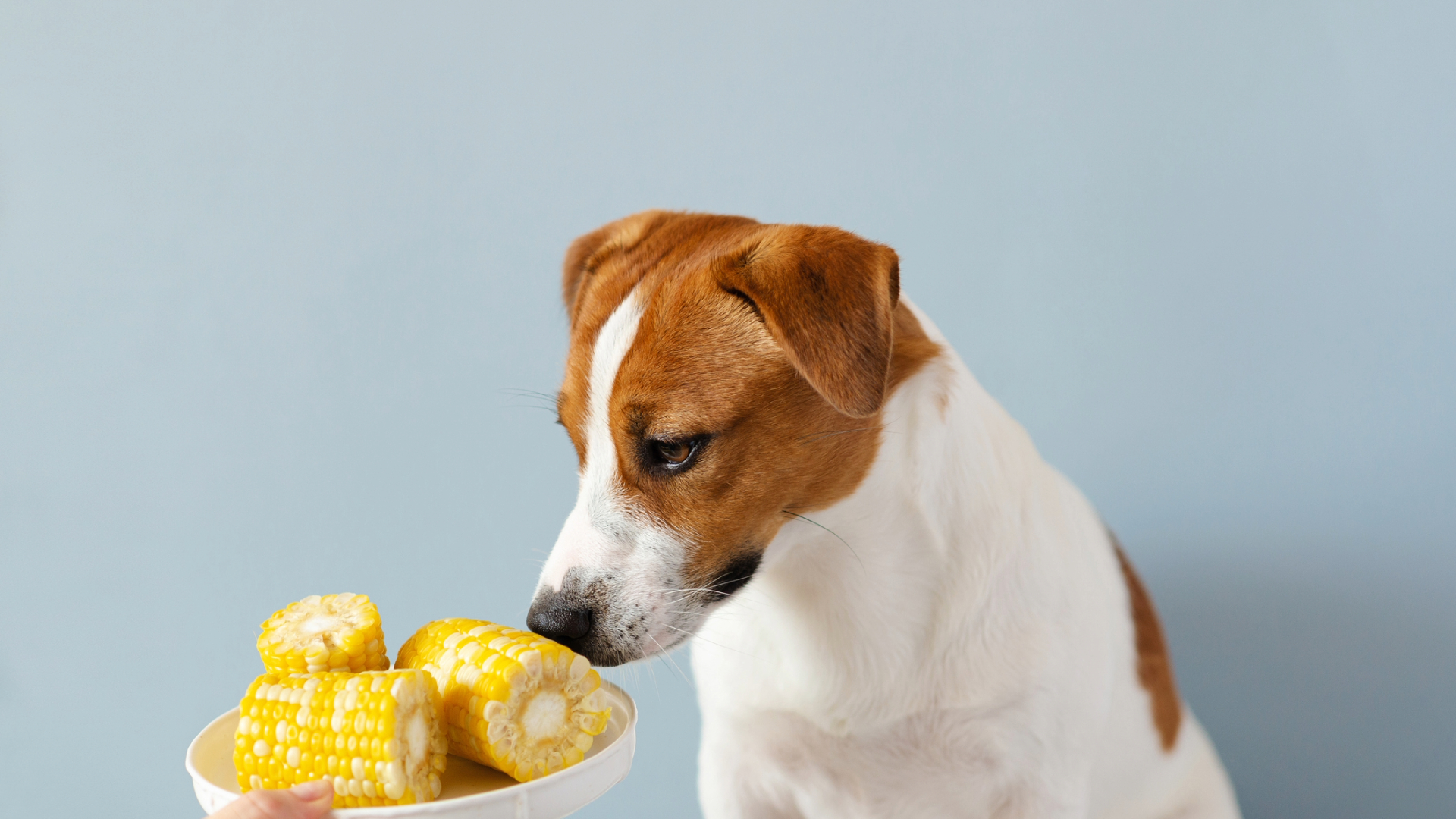
Dogs may nibble corn cobs because they smell good, feel satisfying to chew, and carry the taste of butter, salt, or other food. Some dogs also chew them from boredom, hunger, teething, or simple scavenging.
The concern is not usually the corn itself. The cob can be a choking hazard and may cause a gastrointestinal blockage if a dog swallows part or all of it. Corn cobs do not break down well in a dog’s stomach or intestines. Even a small piece can cause trouble, depending on the dog and the amount eaten.
If your dog has swallowed any part of a corn cob, call your veterinarian or a local emergency veterinary hospital for advice. Do not wait for signs of illness if your dog ate a large piece, swallowed the cob whole, or is a small dog.
Why do dogs nibble corn cobs?
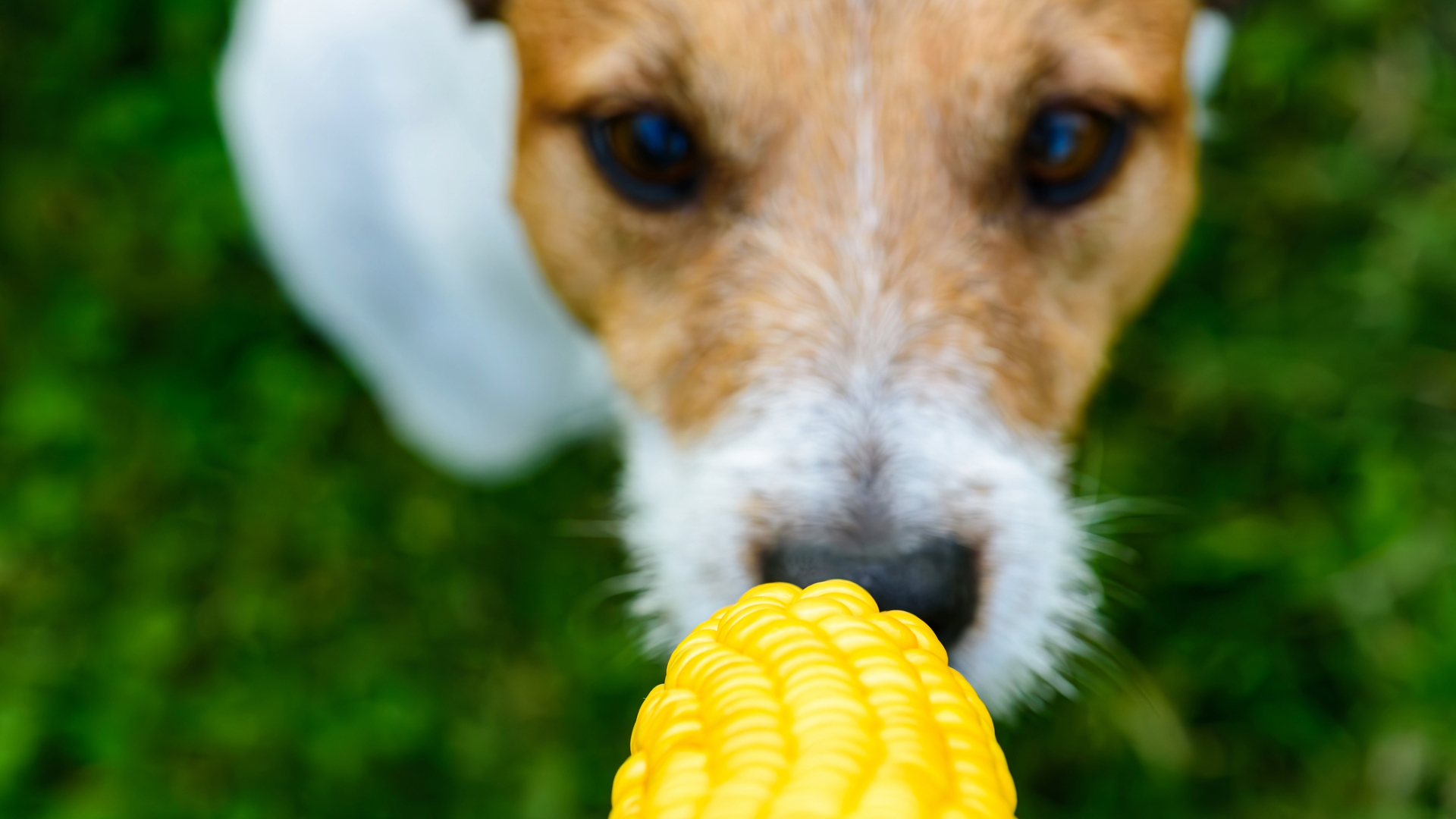
Dogs nibble corn cobs for the same basic reasons they chew many tempting objects: smell, taste, texture, curiosity, and reward. A corn cob can be especially appealing because it holds food scent and may be covered with butter, oil, salt, or meat flavor.
Common reasons include:
- Food scent: Corn and its toppings can smell strong to dogs.
- Interesting texture: The cob is firm but can be gnawed.
- Natural chewing drive: Dogs use their mouths to explore objects.
- Scavenging: A dog may see a discarded cob as a food item.
- Boredom or stress: Chewing can provide an activity or outlet.
- Learned behavior: If a dog once received attention or food after grabbing a cob, the behavior may happen again.
- Teething: Puppies may seek firm objects while their adult teeth develop.
- Fast eating: A hungry or food-driven dog may bite off and swallow pieces before the owner can intervene.
A dog does not need to be hungry to chew a cob. The smell and mouth-feel may be enough. This behavior also does not mean the dog “knows” the cob is dangerous.
The key distinction is between nibbling without swallowing and eating pieces of the cob. Nibbling still creates a risk because the dog may break off a chunk during chewing.
Is a corn cob safe for dogs to eat?
No. Dogs should not eat corn cobs. Plain corn kernels may be safe for many dogs in small amounts when removed from the cob, but the cob itself is different.
A corn cob is tough, fibrous, and not easy for a dog’s digestive system to break down. If swallowed, it may move through the stomach and become stuck in the small intestine. This is called a gastrointestinal obstruction.
A cob can also:
- Become lodged in the throat
- Cause choking
- Irritate or injure the stomach or intestine
- Lead to vomiting and dehydration
- Require endoscopy or surgery
- Become life-threatening if treatment is delayed
Corn cobs are not generally treated as a classic poison. The main danger is physical blockage, not toxicity. However, toppings can add other risks. Butter and grease may upset the stomach, while large amounts of fatty food can contribute to pancreatitis in susceptible dogs. Onion, garlic, heavy seasoning, and some sauces may also be unsafe.
Do not assume that a dog is safe because it swallowed only part of a cob. Risk depends on the piece’s size and shape, the dog’s size, chewing habits, and where the piece travels.
What about corn kernels?
Plain, cooked corn kernels removed from the cob are usually easier for dogs to digest. Give only a small amount, and avoid corn with:
- Butter or heavy oil
- Salt
- Onion or garlic
- Chili or strong spices
- Xylitol-containing sauces or products
- A cob, husk, or large hard pieces
Corn should remain an occasional treat, not a major part of a dog’s diet. Dogs with food allergies, diabetes, pancreatitis, or special diets need advice from their veterinarian before receiving new foods.

What should you do if your dog ate a corn cob?
Act based on what your dog swallowed and how the dog feels. Call your veterinarian promptly if any piece of the cob is missing or may have been swallowed.
Use this sequence:
- Take away the remaining cob. Check whether the cob is whole, partly eaten, or missing.
- Check your dog’s breathing. If the dog is choking, struggling to breathe, collapsing, or has blue or pale gums, seek emergency veterinary care at once.
- Call your veterinarian. Explain the dog’s weight, age, health history, the time of ingestion, and the estimated amount eaten.
- Follow the veterinary team’s instructions. They may advise monitoring, an examination, imaging, or urgent treatment.
- Do not induce vomiting unless a veterinarian tells you to. Vomiting can be unsafe in some situations and may not remove a cob safely.
- Do not give laxatives, oil, bread, or bulky food to “push it through.” These home remedies can delay proper care or worsen the problem.
- Keep the dog calm and prevent more eating. Bring the remaining cob or a photo of it if the veterinarian needs to identify the size and type.
A veterinarian may use an examination and diagnostic imaging to look for an obstruction. Some foreign bodies are difficult to see on plain X-rays, so the veterinary team may recommend additional imaging or other tests.
When is the risk especially urgent?
Seek urgent care when:
- Your dog swallowed the cob whole.
- A large piece is missing.
- Your dog is small, very young, elderly, or has a digestive disorder.
- The dog is vomiting, painful, weak, or unable to keep water down.
- The dog is repeatedly retching or drooling.
- The abdomen looks swollen or tense.
- The dog strains to pass stool or produces very little stool.
- The dog seems unusually quiet, restless, or unable to get comfortable.
- The dog collapses or has trouble breathing.
Do not use the dog’s current appearance as proof that everything is fine. A dog may seem normal soon after swallowing a foreign object. Signs can appear later as the object moves or becomes lodged.

Signs of a corn cob blockage in dogs
A blockage may cause digestive signs, pain, or changes in behavior. Watch for:
- Repeated vomiting
- Loss of appetite
- Drooling or lip licking
- Abdominal pain
- A hunched posture
- Restlessness or pacing
- Lethargy
- Diarrhea
- Straining to defecate
- Little or no stool
- A swollen abdomen
- Dehydration
- Whining when picked up or touched
These signs are not specific to corn cobs. They can also occur with other illnesses. That is why a possible cob ingestion should be reported to a veterinary professional rather than treated at home.
A dog with an intestinal blockage may still pass stool at first. The presence of stool does not rule out a partial blockage. Likewise, diarrhea does not prove that the object has passed.
The safest approach is to contact a veterinarian before symptoms become severe. Early assessment may provide more treatment options than waiting for a crisis.
How to stop a dog from nibbling corn cobs
Prevention works best because dogs often grab food before people can react. Keep corn cobs away from your dog during meals, cookouts, picnics, and holidays.
Use these steps:
- Put discarded cobs in a lidded trash can.
- Do not leave plates or serving dishes within reach.
- Keep food scraps off low tables and counters.
- Supervise dogs around outdoor grills and picnic areas.
- Teach “leave it” and “drop it” with reward-based training.
- Offer a safe chew approved for your dog’s size and chewing style.
- Give food puzzles or short training sessions when the dog is bored.
- Tell guests not to feed the dog from the table.
- Remove corn husks and cobs before serving corn to pets.
- Store leftovers in a closed refrigerator or cabinet.
If your dog repeatedly steals food, management matters more than punishment. A dog that finds a cob in the trash may repeat the behavior because the reward is immediate. Secure the environment first, then build a reliable “leave it” cue.
For puppies, provide safe chew options and redirect gently. Avoid giving objects that splinter, break into sharp pieces, or are small enough to swallow.

Corn cob risk compared with other corn parts
The part of the corn matters more than the word “corn.” This simple comparison can help:
| Corn item | Main concern | General guidance |
|---|---|---|
| Plain kernels removed from the cob | Stomach upset if too much is eaten | Small amounts may be acceptable for many dogs |
| Corn cob | Choking and intestinal blockage | Do not allow dogs to chew or eat it |
| Corn husk | Digestive upset or blockage if swallowed in quantity | Keep away from dogs |
| Buttered or seasoned corn | Fat, salt, spices, onion, or garlic | Avoid sharing seasoned portions |
| Leftover corn in the trash | Mixed food and packaging hazards | Use a secure trash can |
This table is general information, not a diagnosis. A dog’s medical history changes the safest choice. For example, a dog with pancreatitis may need to avoid fatty foods even when the food is not toxic.
The practical rule is simple: remove the kernels from the cob before giving corn to a dog, and discard the cob where the dog cannot reach it.

Common mistakes to avoid
Several well-meaning responses can make a possible foreign-body problem harder to manage.
Waiting for the cob to pass
A cob may pass, but it may also lodge in the digestive tract. Waiting without veterinary advice can allow dehydration, tissue damage, or infection to develop.
Assuming a large dog cannot be affected
Large dogs may swallow larger pieces, which can still obstruct the intestine. Body size can change risk, but it does not make corn cobs safe.
Making the dog vomit
Inducing vomiting at home can cause choking or injury. It may also fail to remove a cob. Only a veterinarian can decide whether vomiting is appropriate and how to do it safely.
Giving extra food or oil
Bread, rice, pumpkin, oil, and other home remedies cannot reliably move a cob through the intestine. They may also worsen vomiting or delay care.
Treating it as a poison only
Poison hotlines can help with toxic ingredients, but a swallowed cob is mainly a foreign-body emergency. A veterinarian is the right contact for possible blockage.
Punishing the dog
Punishment after the event does not teach the dog what to do next. It may increase anxiety and can make the dog swallow objects faster. Secure the trash, trade the item safely, and practice “leave it” later.

Key takeaways
- Dogs nibble corn cobs because of the smell, taste, texture, curiosity, or a need to chew.
- Corn kernels and corn cobs are not the same risk.
- Corn cobs can cause choking or intestinal blockage.
- Call a veterinarian if your dog swallowed any part of a cob.
- Do not induce vomiting or give home remedies unless a veterinarian directs you.
- Watch for vomiting, pain, weakness, appetite loss, bloating, and trouble passing stool.
- Prevent repeat incidents with secure trash, supervision, training, and safe chew options.
Frequently asked questions
Can dogs eat corn on the cob if they only chew it?
No. Chewing still lets a dog break off and swallow pieces. Remove the cob as soon as possible and offer a safe chew instead.
My dog ate a small piece of corn cob. Should I call the vet?
Yes. Call your veterinarian and describe the dog’s size, the piece’s estimated size, and when it happened. A small piece may pass, but it can also cause an obstruction.
How long does it take for a corn cob to cause symptoms?
There is no safe, fixed timetable. Signs may appear soon or later, depending on where the piece is and whether it causes a partial or complete blockage. Do not wait for symptoms before asking for veterinary advice.
Can dogs eat cooked corn kernels?
Many dogs can eat a small amount of plain, cooked kernels removed from the cob. Serve them without butter, heavy oil, salt, onion, garlic, or spicy seasoning. Stop if your dog develops digestive upset.
What if my dog seems fine after eating the cob?
Contact a veterinarian even if the dog appears normal. Early signs may be mild or absent, and a normal bowel movement does not rule out a partial blockage.
Should I call a poison control hotline?
A veterinary poison service may help if the corn had a potentially toxic ingredient, such as xylitol, onion, or garlic. For the cob itself, contact your veterinarian or an emergency veterinary hospital because the main concern is obstruction.
Conclusion
Dogs nibble corn cobs because they are tempting to smell and chew, not because cobs are safe food. The cob can choke a dog or lodge in the digestive tract, so treat any swallowed piece as a veterinary concern.
Remove the cob, keep your dog calm, and call a veterinarian for specific guidance. Then prevent repeat access with secure trash, supervision, safe chews, and reward-based training.