
Introduction
Most dogs have about 6 to 23 bones in the tail. These bones are small vertebrae called caudal vertebrae. The exact number depends on the dog’s breed, genetics, tail shape, and whether the tail was shortened by birth or surgery.
For dog owners in the United States, this range is the most useful general answer. A Chihuahua, Labrador Retriever, and Great Dane may all have different tail lengths and different numbers of tail vertebrae. A dog with a natural bobtail may have far fewer.
The tail is not just a furry “handle.” It is part of the spine. It helps with balance, movement, posture, and communication.

What are the bones in a dog’s tail?
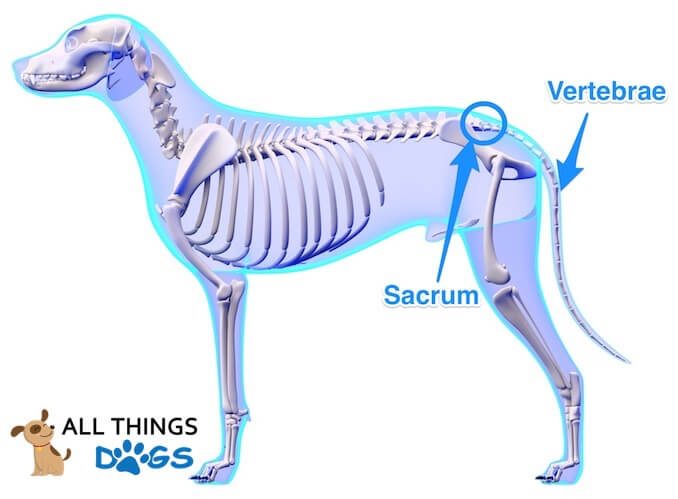
The bones in a dog’s tail are called caudal vertebrae. “Caudal” means toward the tail. Some veterinary sources also use the term coccygeal vertebrae.
Each vertebra has joints, muscles, ligaments, nerves, and blood vessels around it. The bones are largest near the base of the tail. They become smaller toward the tip.
A dog’s spine has five main regions:
| Spinal region | Location | Typical role |
|---|---|---|
| Cervical vertebrae | Neck | Support the head |
| Thoracic vertebrae | Upper back | Connect with the ribs |
| Lumbar vertebrae | Lower back | Support the trunk |
| Sacral vertebrae | Pelvis | Connect the spine to the pelvis |
| Caudal vertebrae | Tail | Support the tail |
The sacrum is not part of the free-moving tail. It is a group of fused vertebrae at the base of the spine. The tail begins just behind the sacrum.
A dog’s tail vertebrae are real bones, even when they are very small. They are not made of cartilage. Their shape and size change from the base to the tip.
Are tail bones the same as back bones?
They are similar in basic structure, but they are not identical. Tail vertebrae are usually smaller and simpler than the vertebrae in the neck or lower back.
The first tail vertebra is often the largest. It connects with the sacrum and supports the rest of the tail. Farther down the tail, the vertebrae become shorter and narrower.
The spaces between the vertebrae allow the tail to bend. Small joints and strong muscles let a dog lift, lower, curl, or wag the tail.
Why does the number of tail bones vary?
The number varies because dogs have different body plans. Breed history, inherited traits, and individual development all affect tail length and structure.
A long, straight tail may contain more visible vertebrae than a short, tightly curled tail. However, tail length alone does not provide a reliable bone count. Some tails are naturally short because the vertebrae are fewer, shorter, or shaped differently.
Natural bobtails
Some dogs are born with a short tail. This is called a natural bobtail. It results from inherited changes that affect tail development.
A natural bobtail is not the same as a tail that was surgically docked. A dog with a natural bobtail may have fewer caudal vertebrae from birth. The exact structure can differ from one dog to another.
Breeds known for naturally short tails include some lines of:
- Pembroke Welsh Corgis
- Australian Shepherds
- Brittanys
- Australian Stumpy Tail Cattle Dogs
Not every dog in these breeds has the same tail. Breed standards and genetics can vary.
Curled and screw-shaped tails
A curled tail does not always mean that the dog has fewer tail bones. The curve may result from the shape of the vertebrae, the joints between them, the muscles, or the way the tail is carried.
Some short-muzzled breeds have tightly curled or screw-shaped tails. In some dogs, unusual tail vertebrae may be linked with other spinal changes. A veterinarian can assess this if the dog has pain, weakness, skin problems, or trouble passing stool.
Docked tails
Tail docking removes part of a puppy’s tail. It therefore reduces the number of tail vertebrae that remain in the visible tail.
Docking is different from a natural bobtail. It is also different from an injury that causes the loss of part of the tail. Rules and veterinary practices related to docking differ across the United States. A licensed veterinarian should handle any medical need involving a dog’s tail.
Mixed-breed dogs
A mixed-breed dog may inherit tail traits from either parent or from several ancestors. That makes it hard to predict the number of tail bones from appearance alone.
A long tail often suggests a larger or more complete set of caudal vertebrae, but it does not prove an exact count. Only imaging, such as an X-ray, can show the bones clearly.

How does a dog use its tail?
A dog uses its tail for balance, body control, and social signals. The tail works with the spine, hips, legs, and trunk muscles.
Balance and movement
The tail can act as a counterweight. A dog may use it while running, turning, jumping, or walking across uneven ground.
This does not mean a dog cannot live well without a tail. Dogs with natural bobtails or medically removed tails can adapt. They may use their body position and other muscles to maintain balance.
Communication
Tail position can provide clues about a dog’s emotional state. A loose wag may occur during friendly excitement. A stiff, high, or fast-moving tail may signal tension or arousal. A tucked tail may occur with fear or stress.
Tail movement must be read with the whole dog. Look at the ears, eyes, mouth, body position, and behavior too. A wagging tail does not always mean a dog is calm or friendly.
Protection and skin care
The tail has muscles, nerves, and blood vessels. Its skin can be injured by doors, falls, bites, rough play, or repeated impact against hard surfaces.
A tail injury may affect the vertebrae, soft tissue, nerves, or all three. The injury may not be obvious under thick fur.

Can a dog break a tail bone?
Yes. A dog can fracture or dislocate a tail vertebra. Tail injuries can happen after a door closes on the tail, the tail is stepped on, or the dog falls or gets hit.
Some injuries occur near the tip and heal with little long-term trouble. Injuries near the base can be more serious because important nerves are nearby.
Signs of a possible tail injury
Contact a veterinarian if a dog has any of these signs:
- A tail that suddenly hangs limp
- Swelling, bleeding, or an open wound
- A sharp bend that was not present before
- Crying when the tail is touched
- Repeated licking or chewing of the tail
- Trouble wagging the tail
- Difficulty sitting or rising
- Loss of bladder or bowel control
- Weakness in the back legs
- A bad smell or discharge from a wound
A “limber tail” can also cause a sudden limp tail. This condition often follows hard exercise, swimming, cold exposure, or prolonged activity. It involves muscles and soft tissues, but a fracture and other problems can look similar.
What to do before the veterinary visit
Keep the dog calm. Prevent running, jumping, and rough play. Do not straighten, massage, splint, or pull the tail.
Do not give human pain medicine unless a veterinarian specifically directs you to do so. Common human drugs can harm dogs. If there is bleeding, place clean gauze or a clean cloth over the area with gentle pressure while arranging veterinary care.
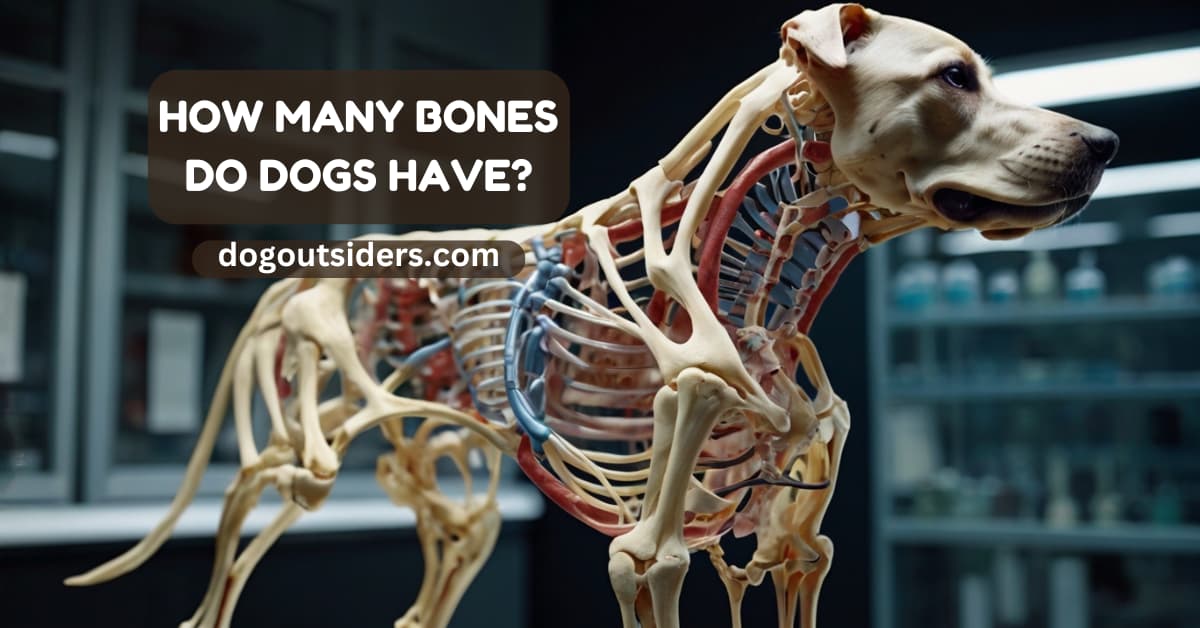
An X-ray may be needed to count or assess the caudal vertebrae. A veterinarian may also check the hips, lower spine, nerves, bladder, and bowel function.
Can you count a dog’s tail bones at home?
No. You may estimate the number of visible tail segments, but that is not the same as counting the vertebrae.
Fur can hide the tail’s shape. Some vertebrae are very small. Joints may be hard to identify from the outside. A curled or docked tail makes visual counting even less reliable.
An X-ray is the practical way to view the tail bones. It should be done for a medical reason, such as pain, injury, weakness, or an unusual tail structure. Imaging a healthy dog only to count its bones is usually unnecessary.
A simple example
Imagine two dogs:
- Dog A has a long tail with 20 caudal vertebrae.
- Dog B has a natural bobtail with 8 caudal vertebrae.
Dog A does not necessarily have better balance or better health. Dog B is not automatically at a disadvantage. Tail function depends on the whole body, not only the number of bones.
The number is an anatomical trait, not a health score.

Key takeaways
- Most dogs have about 6 to 23 tail bones.
- These bones are called caudal vertebrae.
- The exact number differs by breed and individual dog.
- Natural bobtails may have fewer tail vertebrae.
- Docking removes part of the tail and therefore removes some tail bones.
- Tail movement helps with balance, body control, and communication.
- A limp, painful, swollen, or bleeding tail needs veterinary advice.
- An X-ray is the reliable way to see and count the tail vertebrae.
Frequently asked questions
Do puppies have the same number of tail bones as adult dogs?
A puppy generally develops the same basic number of caudal vertebrae that it will have as an adult. The bones grow and become larger, but growth does not usually add a new set of tail vertebrae.
Are dog tail bones connected to the spine?
Yes. The tail begins at the end of the spinal column, behind the sacrum. The caudal vertebrae continue from the base of the spine into the tail.
Can a dog live without a tail?
Yes. Many dogs live active, healthy lives with a natural bobtail or after a medically necessary tail amputation. A veterinarian should treat the cause and protect the remaining tissues.
Does a wagging tail always mean a dog is happy?
No. Tail movement can show excitement, stress, fear, alertness, or conflict. Read the tail along with the dog’s full body language and the situation.
Should I take my dog to a vet for a limp tail?
A new limp tail should be discussed with a veterinarian, especially if it follows an injury or comes with pain, swelling, weakness, bleeding, or trouble urinating or defecating. These signs can point to more than a minor muscle strain.
Conclusion
A dog’s tail usually contains 6 to 23 caudal vertebrae, but no single number fits every dog. Breed, genetics, tail shape, natural bobtail traits, docking, and injury can all change the count.
The bones form a flexible extension of the spine. They support movement and help a dog communicate. If a dog’s tail suddenly changes shape, hangs limp, or seems painful, avoid handling it and contact a veterinarian.