
A male cat may pee outside the litter box because of a medical problem, stress, a litter box issue, or urine marking. The first step is to rule out illness. If he strains, cries, keeps visiting the box, produces little or no urine, vomits, hides, or seems weak, go to a U.S. veterinary clinic or emergency animal hospital now. A blocked urethra can become fatal quickly.
If your cat is passing urine normally but keeps choosing floors, beds, walls, or clothing, schedule a veterinary exam soon. Cats often hide pain, and a sudden change in bathroom habits may be the first visible sign of bladder disease.

The most common reasons a male cat pees outside the box
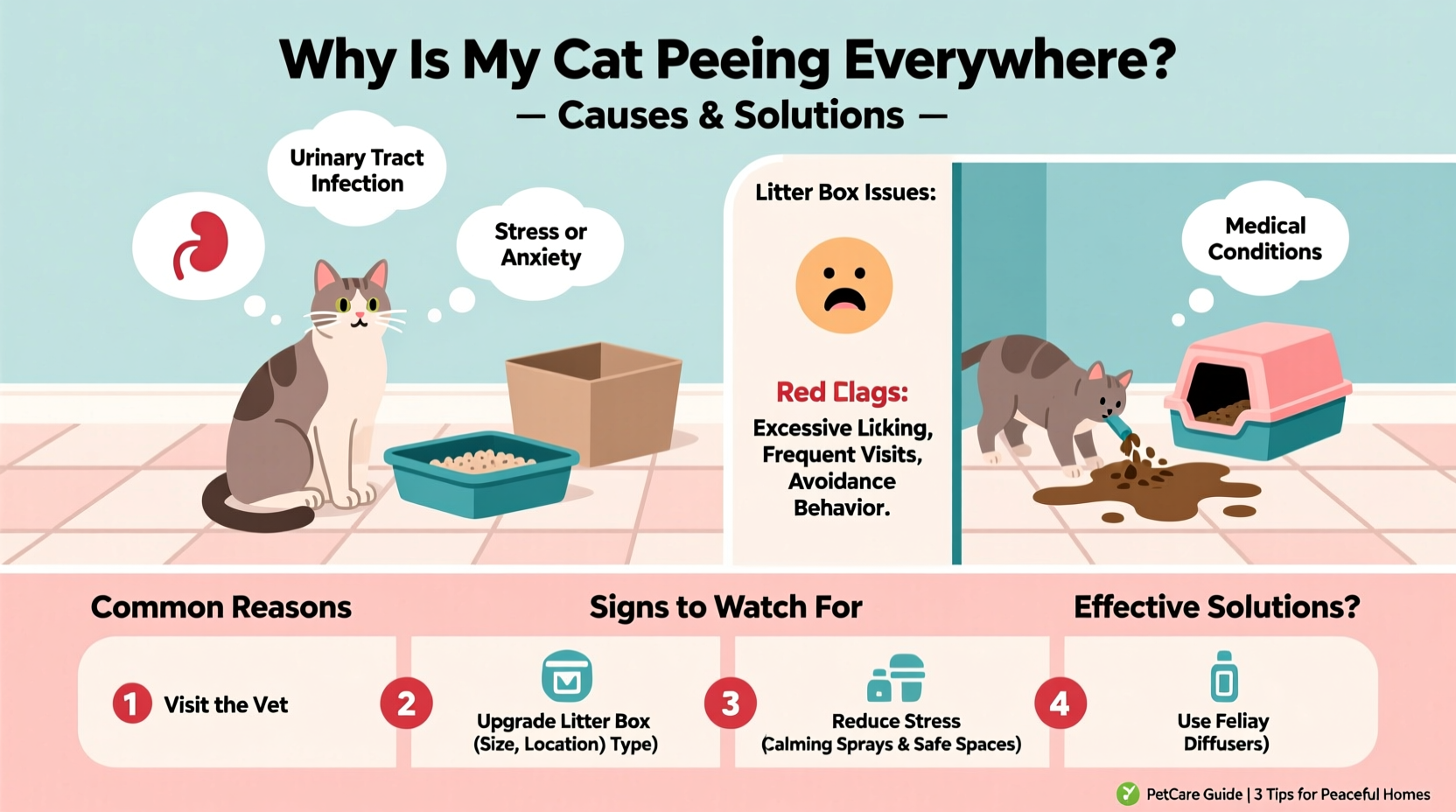
The main causes fall into four groups: medical problems, urine marking, litter box problems, and stress or household change.
1. A urinary or health problem
A cat may avoid the litter box when urination hurts. He may begin to link the box with pain and choose a softer or quieter place instead.
Possible medical causes include:
- Bladder inflammation, often called feline idiopathic cystitis
- Urinary stones or crystals
- A urethral blockage
- A urinary tract infection
- Kidney disease
- Diabetes
- Arthritis or other pain that makes climbing into the box hard
- Age-related confusion or reduced control
- Less often, tumors or other urinary tract disease
A male cat has a special risk because his urethra is long and narrow. A plug, stone, mucus, or swelling can stop urine from leaving the bladder.
The Cornell Feline Health Center explains that lower urinary tract disease can cause frequent urination, straining, blood in the urine, and urination outside the box. These signs can look similar across several diseases, so a home diagnosis is not reliable.
2. Urine marking
Marking is different from normal urination.
A cat that marks usually:
- Stands rather than squats
- Raises or quivers his tail
- Sprays a small amount
- Targets vertical surfaces such as walls, doors, furniture, or curtains
- Keeps using the litter box for regular urination
A cat that empties his bladder often squats and leaves a larger puddle on a flat surface. However, some cats mark on horizontal surfaces, so posture alone cannot prove the cause.
Unneutered males are more likely to spray, especially when they smell or see other cats. Neutering often reduces hormone-driven marking, but it may not stop a habit that has become linked to stress or territory.
3. A litter box problem
Your cat may be saying, in the only way he can, that the box does not work for him.
Common triggers include:
- A dirty box
- Too few boxes
- A box with a strong scented litter
- A covered box that traps odor
- A box that is too small
- High sides that are hard to enter
- A noisy location
- A box near food, water, a washer, or a busy doorway
- Another cat blocking access
- A sudden change in litter brand or texture
Many cats prefer a clean, uncovered box in a quiet place. Older cats and cats with joint pain may need a low-entry box.
4. Stress and conflict
Stress can cause bladder inflammation and can also lead to marking.
Potential stressors include:
- A new baby, pet, roommate, or partner
- Moving to a new home
- Construction or loud noise
- Changes in work schedules
- Conflict with another cat
- Outdoor cats near windows or doors
- Not enough hiding spots or vertical space
- Changes in feeding or play routines
Stress is not “bad behavior.” It is a possible biological and environmental response. Still, do not assume stress is the cause until a veterinarian has checked for medical problems.

How to tell whether your cat is spraying or simply urinating
The location, amount, posture, and pattern can help you describe the problem to your veterinarian.
| Sign | More consistent with spraying | More consistent with regular urination |
|---|---|---|
| Amount | Small amount | Larger puddle |
| Surface | Often vertical | Often horizontal |
| Posture | Standing with tail raised | Squatting |
| Smell | Strong, sharp odor | Urine odor, which can also be strong |
| Box use | Often still uses the box | May avoid the box |
| Pattern | Several small spots | One or more full bladder-sized spots |
| Common trigger | Territory or social stress | Pain, box dislike, illness, or urgency |
This table offers clues, not a diagnosis. A male cat with bladder pain may urinate small amounts in many places. A cat that sprays may also have a medical problem at the same time.
Use a phone camera or written log for one or two days if it is safe to do so. Record:
- Where the urine appears
- Whether the surface is flat or vertical
- The approximate amount
- How often your cat visits the box
- Whether he strains, cries, licks his penis, or hides
- Any recent changes at home
Do not delay care while collecting evidence. Seek urgent help if he cannot pass urine or appears ill.

What to do first: a safe troubleshooting plan
Step 1: Check for emergency signs
Treat these signs as urgent:
- Repeated straining with little or no urine
- Crying or restlessness while trying to urinate
- Frequent trips to the box
- Licking the genital area repeatedly
- A painful or tense belly
- Vomiting
- Extreme tiredness
- Hiding, weakness, or collapse
A blocked male cat may look constipated because he strains in the box. Do not give laxatives, pain medicine, or leftover drugs at home. Do not wait to see whether the problem improves overnight.
Step 2: Arrange a veterinary examination
Even if your cat seems well, arrange a prompt appointment for repeated accidents or a sudden change.
The veterinarian may perform:
- A physical examination
- A urinalysis
- A urine culture in selected cases
- Blood tests
- X-rays or ultrasound when stones, obstruction, or another disease is suspected
Treatment depends on the cause. It may include pain relief, fluids, a diet plan, treatment for infection when infection is confirmed, or care for stones or blockage.
Antibiotics are not a universal answer. Many urinary problems in cats are not caused by bacteria, so medication should follow a veterinary assessment.
Step 3: Improve the litter box setup
Use this practical starting point:
- Provide one box per cat, plus one extra. For one cat, start with two boxes.
- Place boxes in separate, quiet areas.
- Keep at least one box on each floor your cat uses.
- Choose a large box that lets him turn around easily.
- Try an uncovered box if the current one is covered.
- Use unscented, fine-textured litter unless your veterinarian advises otherwise.
- Scoop at least once a day.
- Wash the box with mild soap and water. Avoid ammonia-based cleaners.
- Keep food and water away from the toilet area.
- Give older or painful cats a box with a low entry.
Some cats dislike liners, automatic box noises, or sudden changes in litter. If you change litter, offer the new type in a second box rather than removing the familiar option at once.
Step 4: Clean old urine correctly
Cats can return to a spot that still smells like urine, even when people cannot smell it.
Use an enzymatic pet-urine cleaner that is labeled for the surface. Follow the label directions and let the area dry fully. Wash bedding and clothing promptly. Block access to favorite targets until the odor is gone and the new routine is stable.
Avoid punishment, yelling, or rubbing your cat’s nose in the mess. These actions do not teach correct box use. They can increase fear and make hidden urination more likely.
Step 5: Reduce stress and protect resources
Give your cat safe places to rest, scratch, climb, and hide. In multi-cat homes, spread out food, water, beds, scratching posts, and litter boxes so one cat cannot control every resource.
If outdoor cats trigger spraying, close blinds or use a temporary visual barrier. A predictable play and feeding routine may also help.
A synthetic feline pheromone diffuser may help some stress-related marking cases, but it is not a substitute for medical care, cleaning, neutering, or changes to the home.

A simple cause-and-action guide
| What you notice | Possible cause | Best next action |
|---|---|---|
| Straining or no urine | Possible urethral blockage | Emergency veterinary care |
| Blood in urine | Bladder inflammation, stones, infection, or other disease | Contact a veterinarian promptly |
| Small sprays on doors or walls | Marking or territorial stress | Veterinary check, neutering if intact, reduce triggers |
| Large puddles on beds or floors | Pain, urgency, box dislike, or illness | Veterinary exam and litter box review |
| Accidents after a new cat arrives | Social stress or resource conflict | Separate resources and seek behavior guidance |
| Avoids a covered or dirty box | Box aversion | Add a clean, uncovered box |
| Accidents in an older cat | Pain, kidney disease, diabetes, or confusion | Veterinary exam |
| Uses the box sometimes but not always | Medical issue, location problem, or learned preference | Check health and offer more suitable boxes |
The same symptom can have more than one cause. For example, a cat may develop bladder pain, avoid the box, and then keep using a carpet because it feels safer. Treating only the carpet odor may not solve the original problem.

How diet and water fit into the solution
Water intake can matter in cats with some urinary conditions because dilute urine may reduce irritation or help limit the concentration of certain minerals. However, the right diet depends on the diagnosis.
Ask your veterinarian before changing to a urinary prescription food or adding supplements. Some diets are designed for specific stone types or urinary conditions and may not be appropriate for every cat.
Helpful steps may include:
- Offering wet food if it fits your cat’s health plan
- Providing several clean water bowls
- Trying a fountain if your cat prefers moving water
- Keeping water away from food if that makes him drink more
- Avoiding sudden diet changes
- Following the prescribed diet consistently when one is medically recommended
Do not use human urinary remedies, essential oils, or over-the-counter pain medicine. Acetaminophen, ibuprofen, and several other human drugs can be dangerous or fatal to cats.

When will the peeing stop?
The timeline depends on the cause.
A blockage needs immediate treatment. Bladder pain may improve with veterinary care, but some cats have repeat episodes. Marking may decrease after neutering and removal of stress triggers, but established habits can take weeks to change. A litter box aversion may improve after you provide a better box and remove the urine odor.
Track progress rather than expecting instant perfection. Look for:
- Fewer accidents
- Normal urine amounts
- Less straining or licking
- Regular box use
- More relaxed behavior
- No new urine-marked areas
If your cat continues to urinate outside the box after medical treatment and environmental changes, ask your veterinarian about a certified veterinary behaviorist. Persistent problems may need a combined medical, behavior, and home-management plan.
Common mistakes to avoid
Waiting because the cat seems normal
Cats can have serious urinary disease while still eating and walking around. Straining, repeated box visits, or reduced urine output deserves fast attention.
Assuming every accident is revenge
Cats do not usually pee outside the box to punish a person. The behavior more often reflects pain, urgency, fear, territory, or a box problem.
Cleaning with bleach or ammonia
Ammonia can smell like urine to a cat and may encourage repeat marking. Some cleaning products can also damage fabrics or irritate pets. Use a product made for animal urine and follow its safety directions.
Moving every box at once
A sudden change can make an anxious cat more uncertain. Add a better box first, then adjust the setup gradually.
Restricting water
Never limit water to reduce accidents. A cat with urinary disease needs veterinary guidance, not dehydration.
Giving leftover medicine
Human drugs and old prescriptions may worsen the problem or hide important signs. Use medication only as directed for that cat and that condition.

Key takeaways
- A male cat that suddenly pees outside the box should receive a veterinary check.
- Straining, crying, repeated attempts, or little to no urine is an emergency.
- Spraying is usually a small amount on a vertical surface; regular urination is often a larger puddle on a flat surface.
- Use one litter box per cat, plus one extra, and keep boxes clean and easy to reach.
- Neutering may reduce marking, but it does not replace a medical exam.
- Never punish your cat or give human pain medicine.
- Clean urine with an enzymatic cleaner and reduce stress at home.
FAQs
Why is my male cat peeing everywhere but still using the litter box?
He may be spraying, but illness is still possible. Cats with bladder pain may use the box sometimes and urinate elsewhere at other times. A veterinary exam is the safest first step.
Why is my male cat peeing on my bed?
Beds are soft, absorbent, and strongly scented with their owner’s smell. A cat may choose one because of stress, pain, box aversion, or a learned preference. Block access, clean the bedding with an enzymatic product, and check for medical causes.
Will neutering stop my male cat from peeing everywhere?
Neutering often lowers hormone-driven spraying, especially when performed before the habit is established. It may not stop marking caused by anxiety, conflict, outdoor cats, or a medical problem.
How can I tell if my male cat has a urinary blockage?
Warning signs include repeated straining, frequent box visits, crying, licking the genital area, vomiting, hiding, weakness, and little or no urine. Treat suspected blockage as an emergency and contact a veterinary hospital immediately.
How many litter boxes should I have for one male cat?
Start with two boxes for one cat: one box per cat, plus one extra. Place them in separate quiet areas, keep them clean, and make sure your cat can enter them easily.
Should I change my cat’s food for urinary problems?
Not without veterinary advice. Different urinary conditions need different care, and a sudden diet change can add stress. Ask your veterinarian whether wet food, increased water intake, or a prescription diet fits your cat’s diagnosis.
Conclusion
When a male cat keeps peeing everywhere, the problem is usually a sign of pain, urgency, stress, marking, or an unsuitable litter box—not spite. Rule out a urinary emergency first, arrange a veterinary examination, then improve the box setup and remove urine odors. Fast action is especially important for male cats because a blocked urethra can become life-threatening.