Introduction
For cat owners in the United States, one episode of vomiting may pass on its own. But repeated vomiting can signal a blockage, poisoning, infection, kidney disease, or another urgent problem. The safest way to stop a cat from vomiting is to find and treat the cause—not to give a human medicine or force food or water.
Move your cat to a quiet area. Remove access to plants, string, small toys, spoiled food, and other possible hazards. Then check for emergency signs and call a veterinarian if the vomiting continues or your cat seems unwell.

When Cat Vomiting Is an Emergency
Seek veterinary care now if your cat has any of these signs:
- Vomits several times in one day
- Cannot keep water down
- Has blood in the vomit or vomit that looks like coffee grounds
- Has a swollen, painful, or firm belly
- Gags without producing vomit
- Becomes weak, sleepy, confused, or unsteady
- Has trouble breathing
- Has pale, white, blue, or yellow gums
- Has severe diarrhea or black, tar-like stool
- May have eaten medication, a toxic plant, chemicals, antifreeze, or another poison
- May have swallowed string, yarn, ribbon, thread, or a toy
- Is a kitten, senior cat, pregnant cat, or has diabetes, kidney disease, or another chronic illness
A swallowed string is especially dangerous. Do not pull it from your cat’s mouth or rectum. Pulling can tear the intestine. Go to a veterinary clinic instead.
If you suspect poisoning in the United States, call your veterinarian or an animal poison service. The ASPCA Animal Poison Control Center is available at 888-426-4435. Pet Poison Helpline is available at 855-764-7661. Fees may apply.
A cat that vomits once but stays bright, alert, and comfortable may not need emergency care. Still, watch closely for the next several hours. Cats often hide pain, so a quiet or withdrawn cat deserves extra care.

What to Do at Home After One Mild Episode
If your adult cat vomited once and is acting normal, use these steps:
-
Remove food for a short period.
Give the stomach a brief rest for about two to four hours. Do not withhold food for a long time unless a veterinarian tells you to. Cats can become seriously ill when they do not eat. -
Offer small amounts of water.
Let your cat drink, but do not force water into the mouth. If your cat gulps and vomits, offer only a small amount at a time. If even small sips come back up, call a veterinarian. -
Restart food in small meals.
If vomiting stops, offer a small portion of your cat’s usual food. A spoonful or two is a reasonable starting point for many cats. If it stays down, offer another small meal a few hours later. -
Return to the normal meal plan slowly.
Give small meals for the rest of the day. Resume normal portions when your cat has kept food down and acts well. -
Keep your cat indoors and calm.
Rest makes it easier to watch eating, drinking, urination, stool, and behavior.
Do not force-feed a nauseated cat. Force-feeding can cause stress and may send food into the lungs. Do not give milk, oil, butter, salt water, hydrogen peroxide, antacids, or human drugs unless a veterinarian gives you exact instructions.
A bland diet is not always needed for cats. Plain chicken or other home foods may lack key nutrients, and sudden food changes can upset the stomach. Ask your veterinarian before using a temporary diet, especially for a kitten or a cat with another disease.
How to Tell Vomiting From Regurgitation
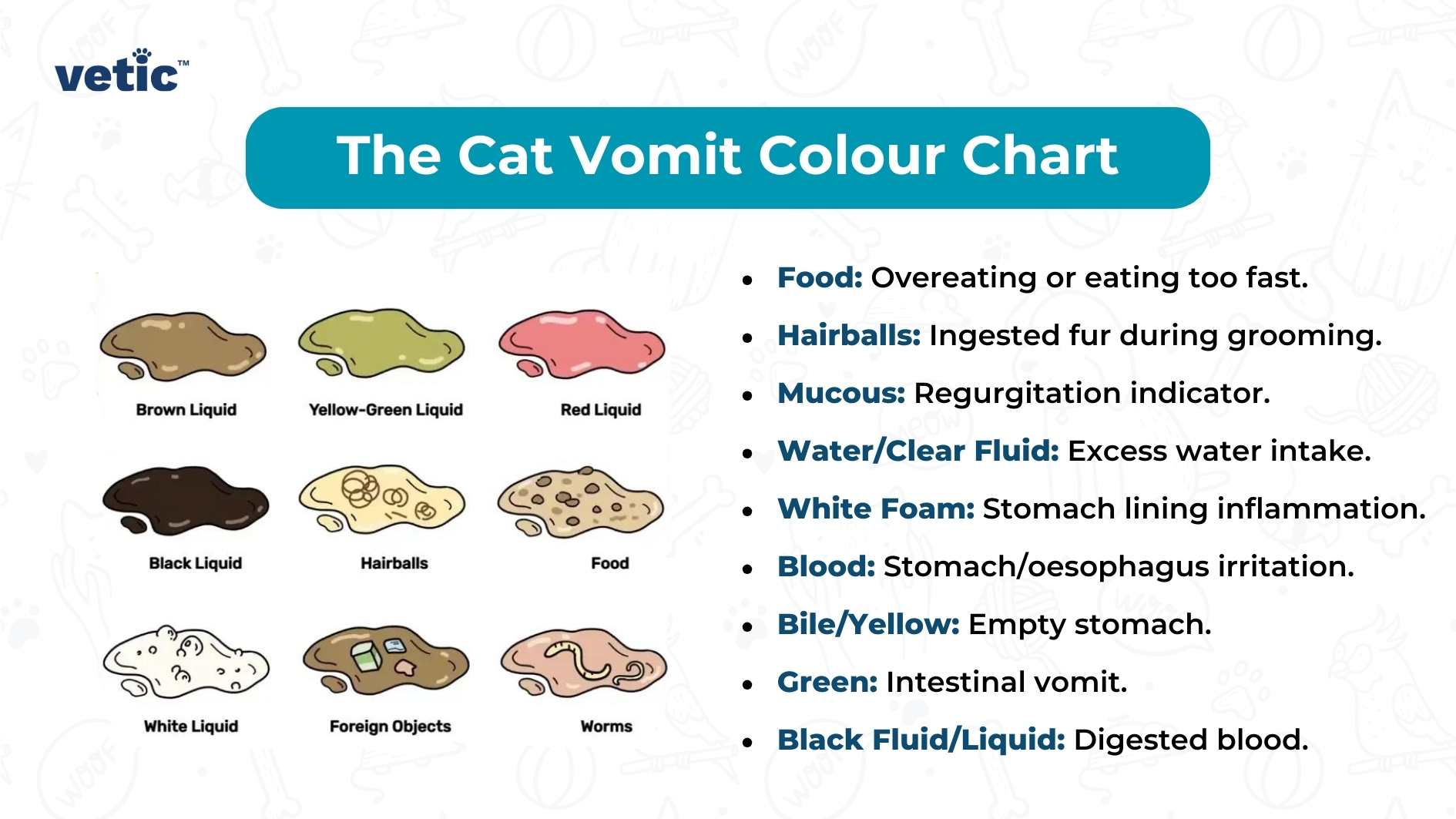
Vomiting is an active process. Your cat may drool, lick the lips, retch, tense the belly, and heave before food or fluid comes up.
Regurgitation is more passive. Food may come up soon after eating with little warning or effort. The food often looks undigested and may be shaped like a tube.
This difference helps your veterinarian find the cause. Take a short video if you can do so safely. Also note:
- When the episode happened
- What came up
- Whether food was digested
- How long after eating it occurred
- Any new food, medicine, plant, or household item
- Changes in thirst, urination, stool, or behavior
A photo of the vomit can also help. Keep the sample away from children and other pets.
Frequent regurgitation may involve the esophagus or eating too fast. Vomiting may involve the stomach, intestines, or another body system. Neither problem should be ignored when it happens often.
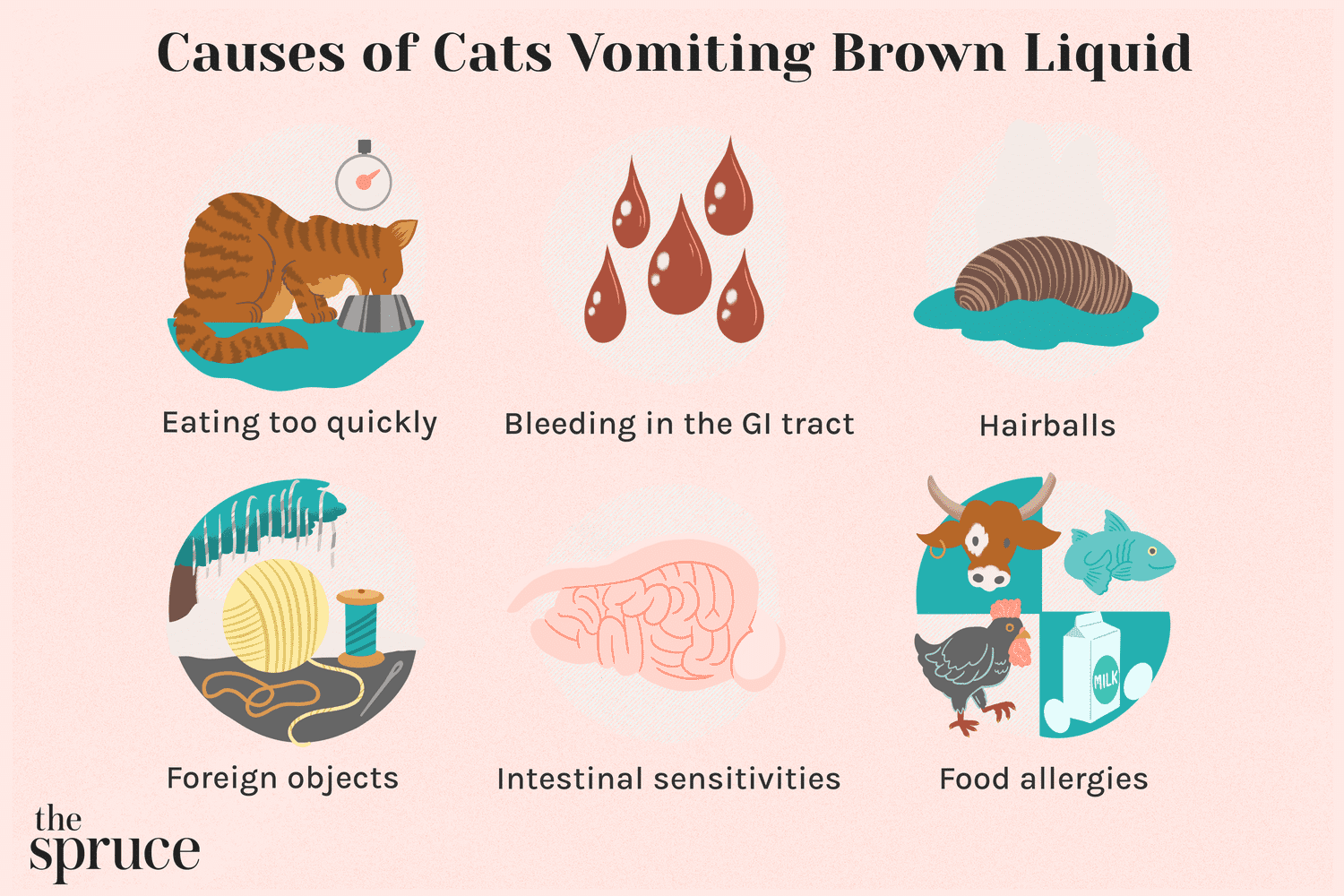
Common Reasons Cats Vomit
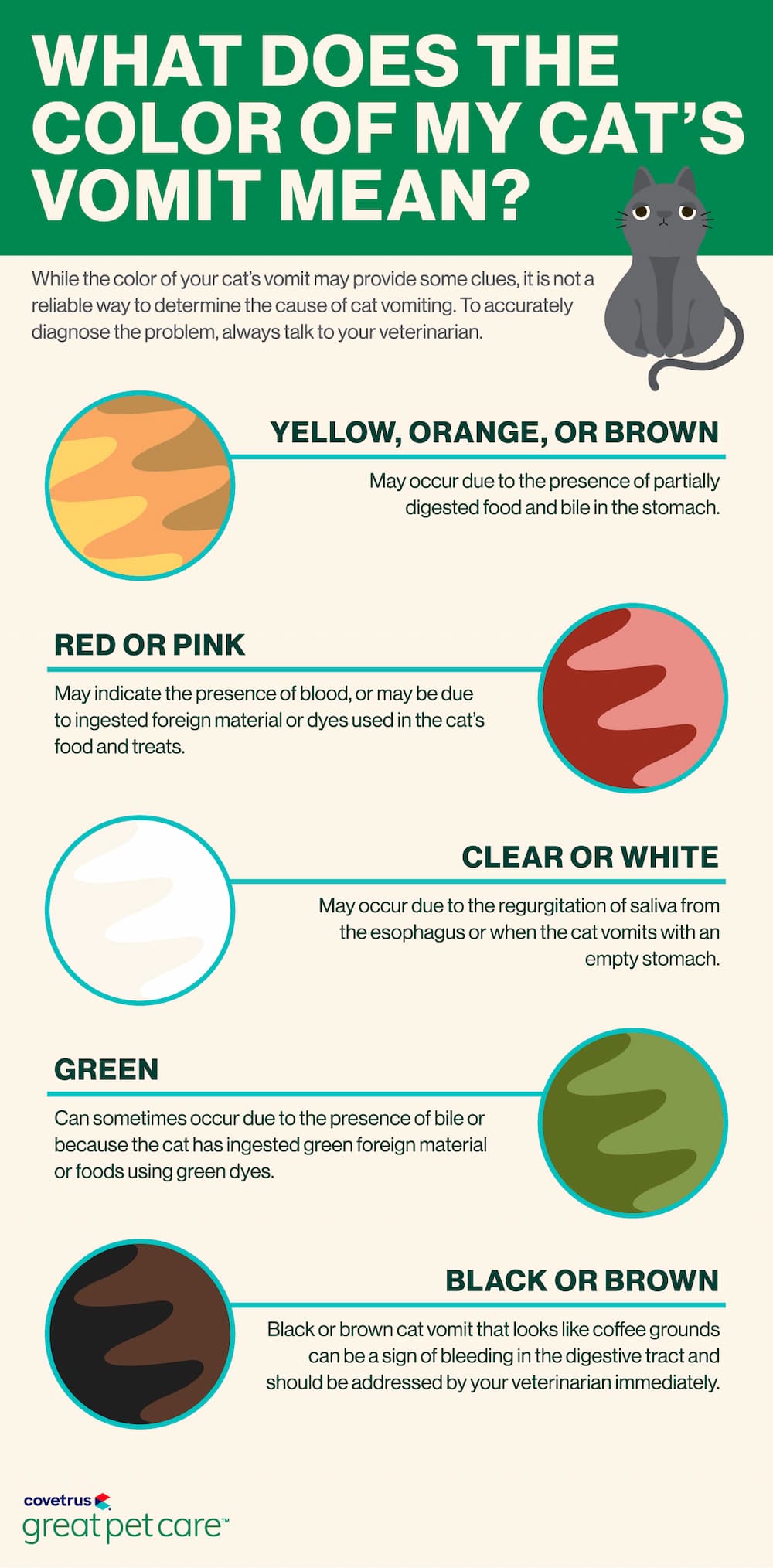
The cause may be mild, but repeated vomiting needs a veterinary exam. Common possibilities include:
Hairballs
Cats swallow loose hair while grooming. Some hair passes in stool, while some may be vomited as a hairball. Occasional hairballs can occur, but frequent hairballs are not something to simply accept as normal.
Brush your cat often to reduce loose hair. Use a brush suited to the coat. Ask a veterinarian before using hairball gels or laxatives. These products do not treat an intestinal blockage.
Eating too fast
Some cats vomit soon after eating because they eat quickly or eat too much. Small, measured meals may help. A slow feeder can help some cats, but it must be easy to clean and safe for the cat to use.
Sudden food changes
A rapid switch in food can upset the digestive tract. Change food over several days by mixing increasing amounts of the new food with the old food. Stop the change and call your veterinarian if vomiting continues.
Parasites or infection
Worms, viruses, and other infections can cause vomiting. Outdoor cats and cats that hunt may have greater exposure to some parasites. Your veterinarian may recommend a stool test or other tests.
Foreign objects
String, ribbon, rubber bands, plastic, and small toys can block the intestines. A blockage can become life-threatening and cannot be safely treated at home.
Disease
Kidney disease, liver disease, diabetes, thyroid disease, inflammatory bowel disease, and cancer can cause vomiting. Dental pain and some medicines may also play a role.
The same symptom can have very different causes. That is why repeated vomiting needs more than a home remedy.

How to Prevent Vomiting From Happening Again
Prevention depends on the cause, but these habits can reduce common triggers:
- Feed measured meals on a regular schedule.
- Split the daily amount into smaller meals if your cat eats too fast.
- Keep new food changes gradual.
- Store medications, cleaners, chemicals, and human foods behind closed doors.
- Remove toxic plants from your cat’s environment. Lilies are especially dangerous to cats.
- Keep thread, yarn, ribbon, hair ties, and small toys out of reach.
- Brush long-haired cats often.
- Use parasite prevention recommended by your veterinarian.
- Keep fresh water available.
- Do not give table scraps or rich foods.
- Keep your cat indoors if outdoor eating or hunting causes stomach problems.
- Schedule routine veterinary exams.
Do not use an over-the-counter “anti-vomiting” drug without veterinary advice. Human medicines can be dangerous for cats, even in small amounts. Acetaminophen, ibuprofen, naproxen, and many cold medicines can cause severe poisoning.
Do not try to make a cat vomit at home. Hydrogen peroxide is not a safe way to induce vomiting in cats. A veterinarian or poison-control professional must decide whether any treatment is appropriate.
When to Call Your Veterinarian
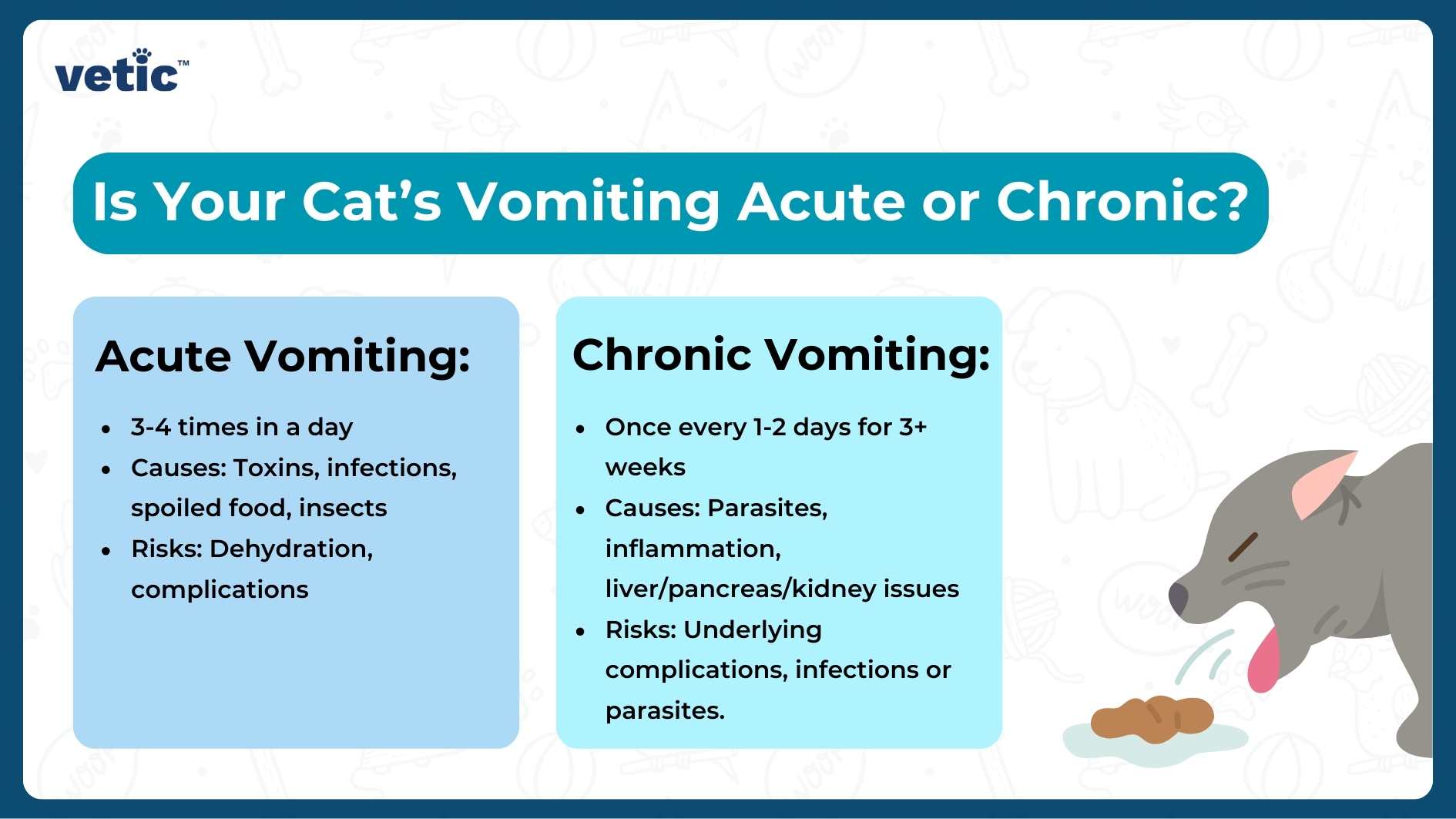
Call your veterinarian the same day if vomiting happens more than once, returns over several days, or comes with poor appetite, weight loss, diarrhea, constipation, increased thirst, or changes in urination.
Call sooner if your cat has a health condition or takes prescription medicine. A cat that stops eating can develop hepatic lipidosis, also called fatty liver disease. This risk is higher in overweight cats, but any cat that refuses food needs attention.
Your veterinarian may ask about diet, timing, possible toxin exposure, and bowel movements. The clinic may perform a physical exam, blood tests, a fecal test, X-rays, or an ultrasound. Treatment depends on the cause and may include fluids, prescription anti-nausea medicine, parasite treatment, a special diet, or surgery for a blockage.
Do not wait for a visible decline. Cats can lose fluids quickly, and a serious problem may begin with symptoms that seem mild.

A Simple Decision Guide
| What you see | What to do |
|---|---|
| One episode, adult cat is bright and comfortable | Watch closely, offer small amounts of water, and restart small meals after a short rest |
| Vomiting happens again | Call your veterinarian for advice |
| Water will not stay down | Seek prompt veterinary care |
| Blood, severe pain, weakness, or a swollen belly | Go to an emergency veterinary clinic |
| Possible poison or swallowed string | Call a veterinarian or poison service at once |
| Kitten, senior cat, pregnant cat, or chronically ill cat vomits | Contact a veterinarian promptly |
| Cat refuses food after vomiting | Call your veterinarian, especially if refusal continues |
The safest home plan is for a single, mild episode only. The more often vomiting occurs, the less suitable home treatment becomes.

Key Takeaways
- One mild episode may pass, but repeated vomiting needs veterinary advice.
- Offer small amounts of water and restart food in small portions after a short rest.
- Never give human medicine, milk, oil, salt water, or hydrogen peroxide without veterinary direction.
- Do not pull swallowed string.
- Blood, pain, weakness, toxin exposure, or inability to keep water down is an emergency.
- Keep a record or video to help your veterinarian identify the cause.
Frequently Asked Questions
Can I give my cat Pepto-Bismol or another human stomach medicine?
No. Some human medicines can harm cats or hide signs of serious illness. Ask a veterinarian before giving any medication.
Should I stop giving water to a vomiting cat?
No. Water is important, but do not force it. Offer small amounts. If your cat vomits every drink, seek veterinary care.
How long can a cat go without eating?
Do not intentionally starve a cat. A cat that refuses food, especially after vomiting, should be discussed with a veterinarian. Cats can develop serious liver problems when they do not eat.
Is cat vomit with hair always just a hairball?
No. Hair in vomit does not prove that the problem is harmless. Frequent hairballs, repeated vomiting, poor appetite, or constipation need a veterinary check.
Can grass make a cat vomit?
Some cats eat grass and later vomit, but vomiting can also signal disease or a foreign object. Keep cats away from grass treated with pesticides and from toxic plants. Persistent vomiting needs veterinary advice.
Conclusion
You may be able to monitor a healthy adult cat after one mild episode, but there is no reliable home cure for ongoing vomiting. Give the stomach a short rest, offer small amounts of water, avoid unsafe medicines, and restart food slowly if vomiting stops.
If vomiting repeats or your cat shows pain, weakness, blood, toxin exposure, or trouble keeping water down, contact a veterinarian or emergency clinic. Finding the cause is the real way to stop the vomiting and protect your cat.