
Block access, raise the box, clean often, and train a leave it.
Dogs raid litter boxes for many reasons, but you can fix it. In this clear, friendly guide, I’ll show how to keep dogs out of cat litter box with simple steps, smart setups, and training that actually works. I’ve helped many homes solve this messy habit, and I’ll share what works fast, what lasts, and what to avoid. Read on to learn safe tools, real-life tweaks, and vet-backed tips that protect both your cat and your dog.
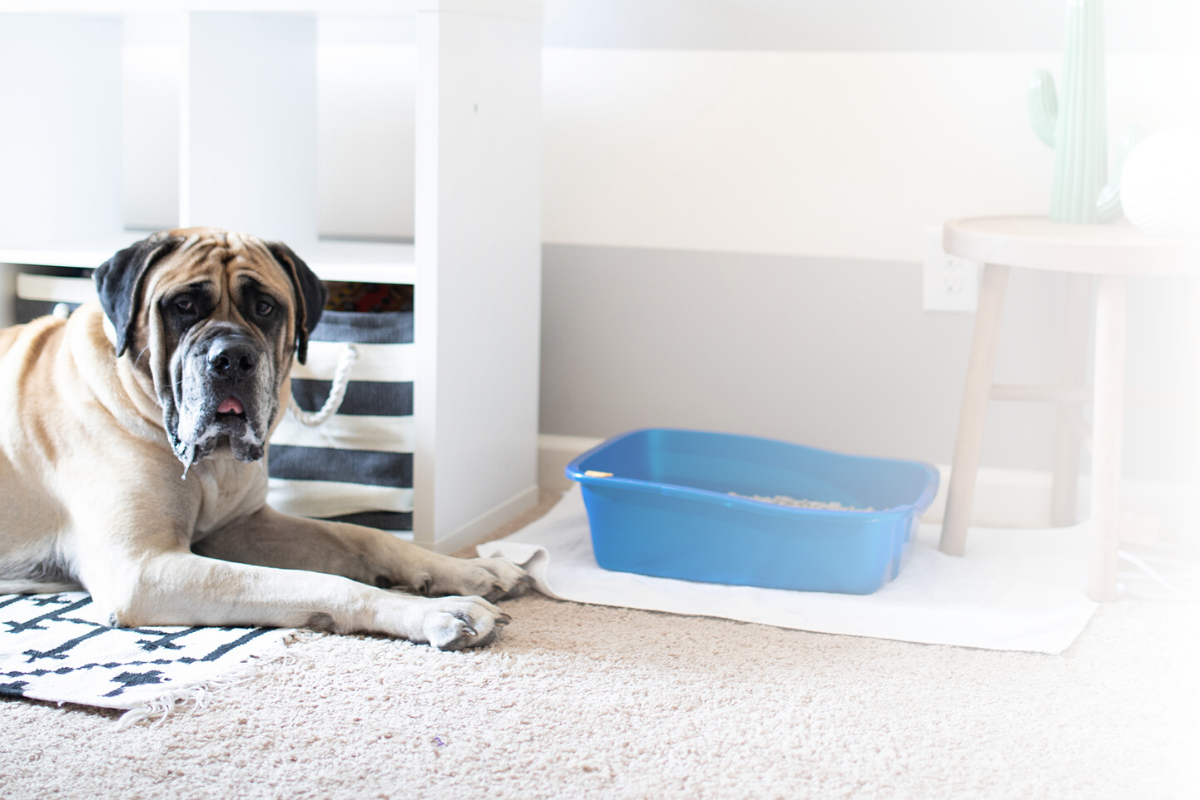
Why dogs go after the litter box
Dogs are scavengers by nature. Cat poop smells like a high-protein snack to them. Boredom, stress, or hunger can make the habit worse. Some dogs also do it out of curiosity or for attention.
Health can play a role. Coprophagia can link to diet gaps, parasites, or tummy upset. If the habit starts fast or seems extreme, talk to your vet and bring a fresh stool sample. That rules out medical causes.
There are risks. Litter can clump in the gut. Poop may carry parasites. The smell alone can lead to more house sniffing. How to keep dogs out of cat litter box starts with understanding these root causes, then using smart prevention.
Quick wins you can use today
Start simple. Small changes cut most raids right away.
• Scoop the box at least twice a day. This removes the reward.
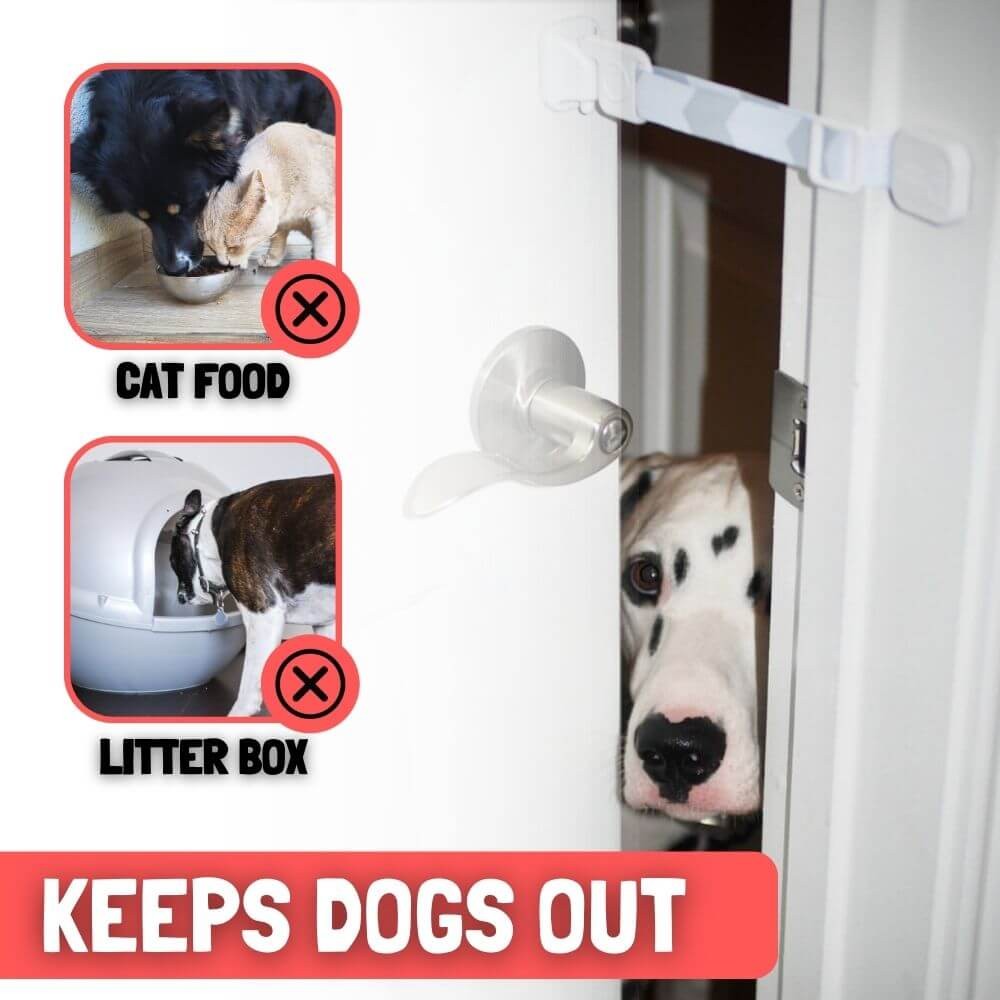
• Close the door or use a door strap to leave a cat-sized gap. Cheap and fast.
• Place a baby gate with a small pet door. Most medium dogs cannot pass, cats can.
• Feed your dog on a schedule and add enrichment. A busy dog raids less.
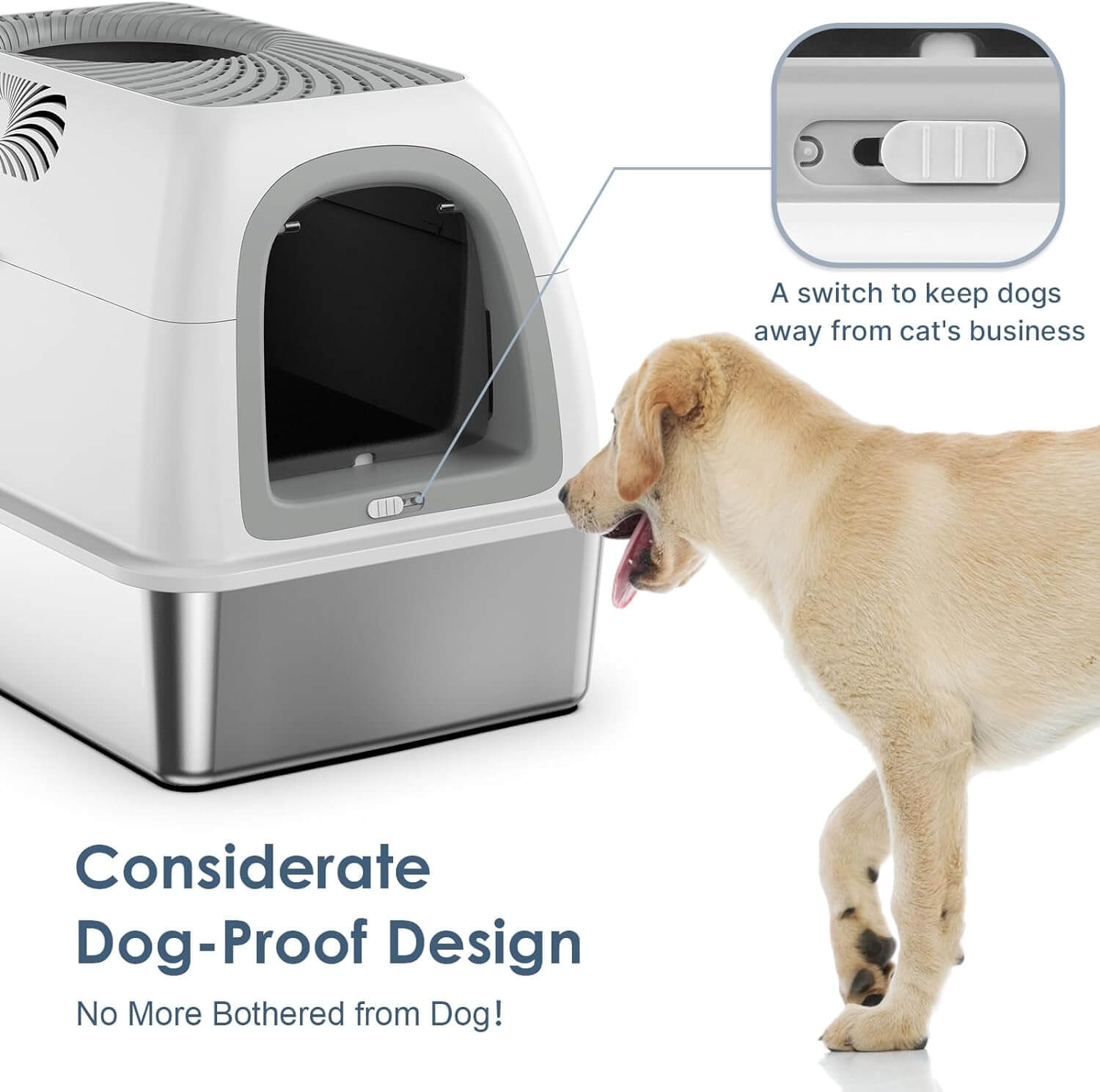
• Add a top-entry or high-sided litter box. It raises the entry past many snouts.
If you need fast relief, pick two of the above today. This is the quickest way how to keep dogs out of cat litter box without stress for your cat.
Set up your home to dog-proof the litter box
Good layout beats willpower. Make the box easy for your cat and hard for your dog.
• Location matters. Put the box in a low-traffic, calm spot. Avoid laundry rooms with loud machines.
• Elevate the entry. A stable platform 8 to 12 inches high stops many dogs but lets most cats hop in.
• Gate the area. A pressure gate with a small pet door or a vertical gap works well. Keep gaps small.
• Use a door strap. It holds an interior door partly closed so only your cat slips through.
• Try a microchip pet door. It unlocks for your cat’s chip and blocks the dog.
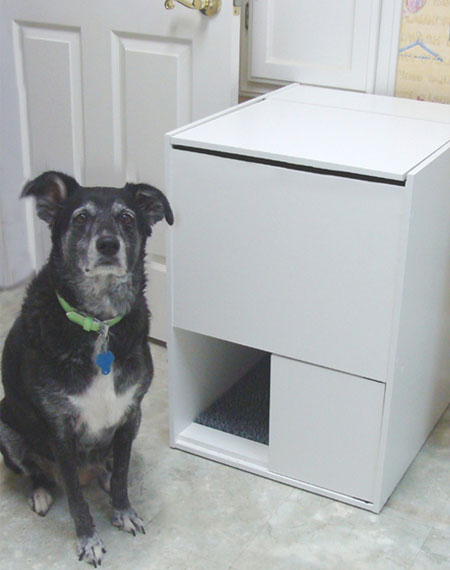
Litter box designs help too. Top-entry boxes and high-sided boxes reduce dog access. Enclosed cabinets with side mazes work well. Vent them for airflow. Measure your cat’s shoulder height and choose an entry size your cat can use but your dog cannot. When clients ask me how to keep dogs out of cat litter box in small homes, I often pair a cabinet with a door strap for a clean, tight setup.

Train your dog to ignore the box
Management stops access. Training builds long-term control. Do both.
• Teach leave it. Start with a treat in your closed fist. When your dog backs off, mark yes and pay from the other hand. Add the cue leave it.
• Add movement. Place a treat on the floor under your shoe. Say leave it. Mark and reward when your dog backs off.
• Generalize to the litter room. Put your dog on leash. Walk past the room. Say leave it as your dog looks. Reward for turning away.
• Reward what you want. Pay your dog for sniff-and-go behavior. Calm choices win big.
• Use place training. Send your dog to a bed while the cat uses the box. Reward calm stays.
• Prevent rehearsal. Keep barriers up. Every success at the box makes the habit stronger.
• Skip scolding. Punishment can make sneaky raids. Reward-based work sticks better.
With two weeks of short daily reps, most families see a big change. If you want the best odds on how to keep dogs out of cat litter box for good, mix training with smart barriers.
Keep the litter box clean and your cat happy
A clean box lowers the draw for dogs. It also keeps your cat loyal to the box.
• Scoop twice daily. Empty and wash the box weekly.
• Use the right count. One box per cat, plus one extra, helps a lot.
• Mind litter type. Most cats like fine, unscented, clumping litter. Strong scents can push cats away.
• Size and entry. Big cats need big boxes. Seniors need low steps.
• Reduce stress. Give your cat safe rests, perches, and play time.
Cat comfort matters. If your cat avoids the box, your dog may learn the wrong places to search. Keeping it clean is a key step in how to keep dogs out of cat litter box and avoid accidents.

Product guide: gates, cabinets, and boxes that work
You do not need fancy gear, but the right tool helps.
• Baby gates with pet doors. Great for most medium dogs. Check bar spacing for tiny dogs.
• Door straps. Cheap and fast. Set a small gap that fits your cat, not your dog.
• Microchip pet doors. Best for open-plan homes. Your cat gets in; your dog stays out.
• Top-entry boxes. Good for many cats, but not for some seniors or large cats.
• High-sided boxes. Simple and cheap. Pair with a small entry cutout.
Watch-outs: avoid wobbly stands and slippery steps. Skip heavy perfumes that bother cats. Secure any cabinet so the door cannot swing open. If you ask me how to keep dogs out of cat litter box with one buy, I often pick a gate plus a top-entry box.

Troubleshooting real-life setups
Every home is different. Tweak the plan to fit yours.
• Small dogs that fit everywhere. Use vertical height and tight cat-only mazes inside a cabinet.
• Seniors or kittens. Lower the entry and use gates, not jumps. Comfort first.
• Apartments. A door strap or microchip pet door keeps space open yet secure.
• Multi-dog homes. Train a group leave it. Start one at a time on leash.
• Night raids. Close the dog in your room or block the hallway at night.
If you still struggle, record a short video of the layout and your dog’s path. Fix the path, not just the dog. That shift is key for how to keep dogs out of cat litter box in tricky homes.
Safety, health risks, and when to call the vet
Most raids are gross but mild. Still, know the risks. Clumping litter can swell in the gut. Poop can carry parasites. Dogs may get belly pain or diarrhea.
Call your vet if your dog vomits, seems dull, or strains to poop. Ask for a fecal test and talk about a safe deworm plan. If coprophagia is new, ask about diet, stress, and gut health. A quick check supports your plan for how to keep dogs out of cat litter box and protects both pets.
Frequently Asked Questions of how to keep dogs out of cat litter box
Will a covered litter box solve the problem?
It can help but is not a cure. Many dogs still nose under or tip the lid. Pair a covered box with gates or a door strap.
How high should I raise the litter box?
Eight to twelve inches works for most homes. Test with a stable step that your cat clears with ease and your dog does not.
Are baby gates safe for cats and dogs?
Yes, if set well. Choose a sturdy gate, check bar spacing, and make sure your cat can pass without jumping too high.
Do sprays or taste deterrents work?
They help some dogs but often fade. Management plus training gives better and longer results.
Can training alone stop litter box raids?
Sometimes, but access control makes it stick. Use leave it and place work with a barrier for best results.
Is a top-entry litter box okay for senior cats?
It depends on your cat. If hopping is hard, use high sides with a low cutout and keep the entry stable.
How often should I clean the litter box to reduce raids?
Scoop twice a day and deep clean weekly. Less waste means less reward for your dog.
Conclusion
You can stop litter box raids with a few smart moves. Block access, keep the box clean, and train calm leave it skills. Fit the setup to your pets, and adjust for age, size, and home layout.
Take one step today. Add a gate or strap, scoop on schedule, and do a two-minute leave it session. Want more help on how to keep dogs out of cat litter box? Subscribe for more pet-friendly home tips, or share your setup questions in the comments.
